
Jazz can be played on almost any instrument, but a few voices appear again and again: saxophone, trumpet, trombone, piano, bass, drums and guitar. The useful question is not only what each instrument is called. It is what each one listens for, and how the players make room for one another.
The short answer: a jazz band is a conversation
The most familiar jazz lineup pairs melody instruments with a rhythm section. Saxophone, trumpet, trombone, clarinet, flute and voice often carry melodies or step forward for solos. Piano, bass and drums form a classic rhythmic core, while guitar can support the harmony or become a featured melodic voice. The National Jazz Curriculum’s guide to instruments describes that basic division clearly: horns handle written and improvised melodies, while piano, bass and drums support them and each other.
That division is a starting point, not a rulebook. Jazz has room for an unaccompanied piano, a bass-and-guitar duo, a large ensemble, a percussion-heavy group or a band that uses instruments not normally found in a club combo. What makes the music feel like jazz is the shared attention to rhythm, tone, improvisation and response. As the Smithsonian’s introduction to jazz explains, improvisation, swing, blue notes and call-and-response are central parts of the tradition.
For a listener, the quickest path in is simple: find the pulse, find the melody, then notice how the musicians trade those jobs. You do not need to identify every chord or name every scale. You only need to hear when one voice speaks and the others create the room around it.
The rhythm section: piano, bass and drums
In a small jazz group, piano, bass and drums are often called the rhythm section. The piano supplies harmony, color and rhythmic punctuation. A pianist may play a compact chord, leave a breath of space, then answer a soloist with another short idea. That supportive, rhythmic chord work is often called comping, short for accompanying. It is less about filling every second than making the harmony clear and alive.
The bass gives the group weight and direction. On an upright bass, a player can make the chord roots and the pulse feel physical. On electric bass, the sound can be rounder or more direct, depending on the setting. Either way, the bass helps everyone hear where the song is going. The drummer joins that foundation with time, texture and accents. Cymbals may carry a flowing pulse, while the snare, bass drum and toms answer a phrase or lift a transition.
None of these roles is merely background. The pianist, bassist and drummer are listening to each other in real time, shaping volume and intensity as the song changes. They can also take solos. In a strong performance, the rhythm section does not simply keep time for the band. It makes the band’s time feel inevitable.
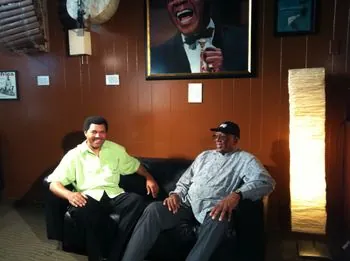
Saxophone, trumpet and trombone: voices that sing and answer
The saxophone is one of the sounds many people recognize first in jazz. It can whisper, growl, soar or blend into a section. Alto, tenor, soprano and baritone saxophones each bring a different register and weight. A saxophonist may state the melody at the beginning of a tune, improvise a solo in the middle, then return to a written line with the rest of the band.
Trumpet and trombone add brass color. The trumpet can cut through a room with a focused, bright sound or soften into a muted, intimate voice. The trombone’s slide gives it a broad, vocal character that can move smoothly between notes. Together with saxophones, these instruments can create a horn section that plays a melody in unison, stacks a harmony or sends short answers back to a singer or soloist.
Listen for call and response. A horn player may play a phrase, then the piano or another horn replies. A soloist may leave a gap, and the drummer fills it with a small accent. Jazz is full of these exchanges. It is one reason an ensemble can feel spontaneous even when the musicians know the song well. The tune gives everyone a shared language, and the performance gives them room to answer it in their own voices.
The Smithsonian’s history of jazz traces this expressive freedom to a music rooted in African American culture, shaped by blues, ragtime and many other musical traditions. Instruments matter, but the way musicians speak through them matters more.
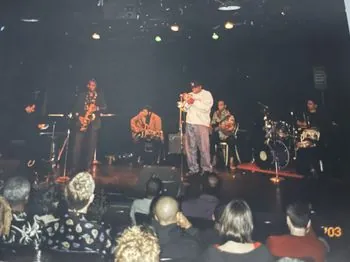
Piano and guitar: harmony that can lead
Piano and guitar are especially flexible in jazz because they can make chords and melodies. A pianist might frame a horn line with a few well-chosen notes, then take a solo that moves through the tune’s harmony one phrase at a time. A guitarist can do much the same work, using a warm chord behind a singer, a light rhythmic pattern under a saxophone, or a single-note line that takes the foreground.
That flexibility asks for restraint. In a group with piano, guitar and bass, not everyone needs to play every chord at full volume. Good players choose space. The guitarist may use sparse voicings while the piano supplies color, or the pianist may leave air around a guitar solo. The result is clearer than a wall of sound, and it makes the band’s timing easier to feel.
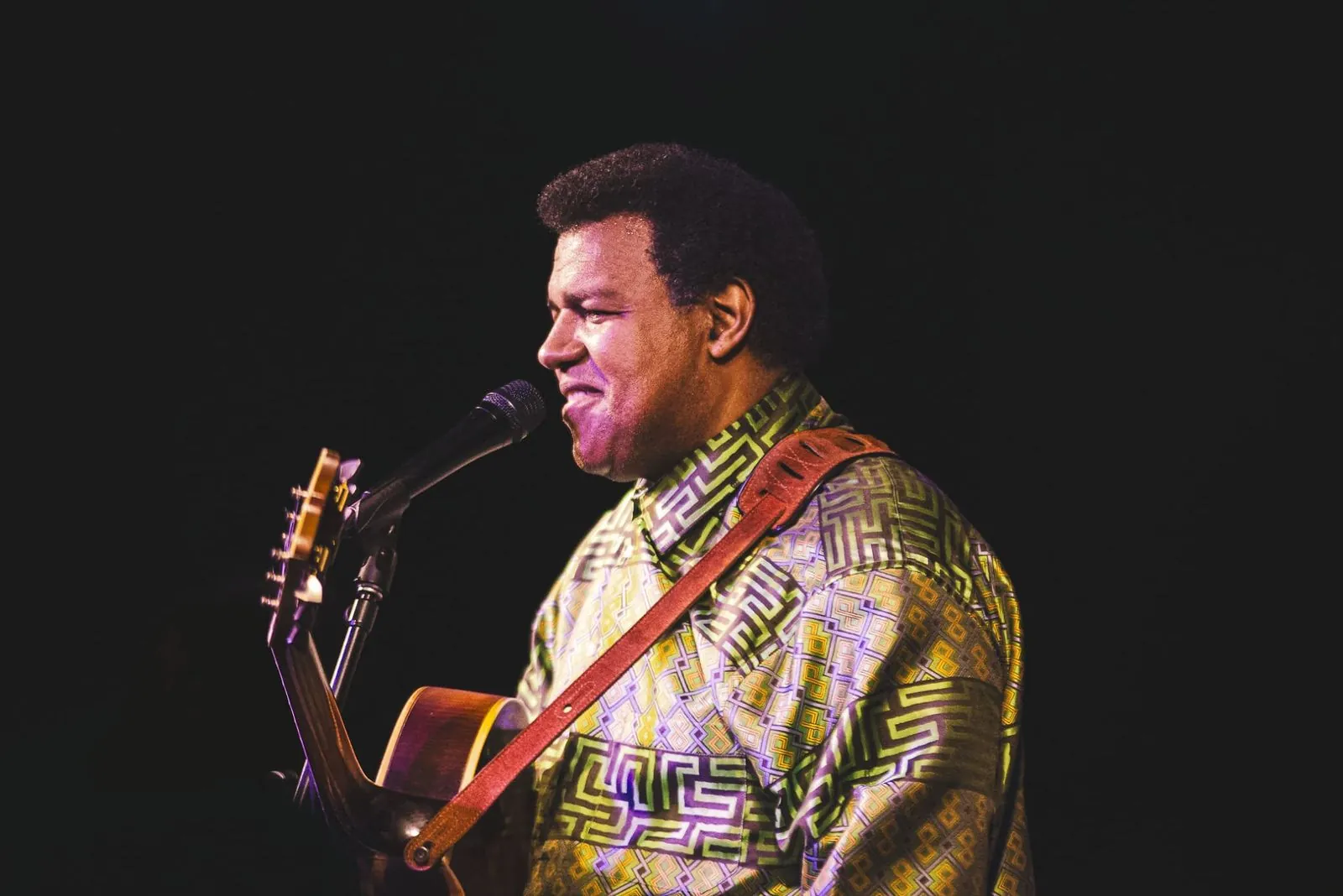
This is a helpful bridge for listeners who know Pascal first as a guitarist. A guitar can be rhythmic, melodic and conversational all at once. On the band’s recordings, listen for how a guitar part can state a phrase, support another instrument, then step aside. That willingness to change roles is central to jazz ensemble playing.
Clarinet, flute, vibraphone, percussion and voice
Jazz is much larger than its most familiar club lineup. Clarinet was a major voice in early New Orleans and swing-era bands. Flute can add an airy, lyrical sound. Vibraphone uses metal bars and a motor-driven vibrato effect to create ringing tones that can blend with piano or stand out sharply above a rhythm section. Organ, accordion, cello, violin and many other instruments have all found meaningful places in jazz.
Percussion reaches far beyond a standard drum kit. Congas, bongos, timbales and other hand percussion are vital in Afro-Cuban and Latin jazz, where rhythmic traditions from the Caribbean and the Americas meet improvisation. The Smithsonian’s account of Latin jazz’s musical exchange notes the importance of percussion and the African heritage shared across Caribbean and American music.
Voice belongs in this picture too. A singer can lead a lyric, shape a standard melody, improvise a scat phrase or trade lines with an instrument. The voice is not an extra decoration on top of the band. It is another improvising voice, with its own tone, timing and way of answering the rhythm section.
How a jazz song gives everyone a job
Many jazz performances begin by stating a tune, sometimes called the head. One player or several instruments present the melody while the rhythm section establishes harmony and pulse. Then the tune opens up. A saxophonist may improvise over the chord progression. The trumpet might follow. A pianist or guitarist may take a turn, and the bassist or drummer may be featured before the melody returns.
That structure helps a first-time listener know what to expect. The melody is the map. The improvised solos are different journeys through it. The rhythm section keeps the road visible, but it changes the scenery as it goes. The group may get quieter behind one soloist, more insistent under another, or suddenly leave space for a dramatic pause.
In a large band, there may be sections of saxophones, trumpets and trombones. In a small group, there may be only one horn. Neither format is more truly jazz than the other. The key is interaction. The National Jazz Curriculum’s bebop overview describes small groups that range from a piano-bass-drums trio to ensembles with horns and guitar. The lineup changes, while the practice of listening remains.
A listening exercise for your next jazz performance
Try following one job at a time rather than hearing the whole band as a blur:
- Start with bass: Find the low notes that show you the pulse and the direction of the harmony.
- Add drums: Listen for the ride cymbal, snare or hand percussion that gives the time its shape.
- Find the chord voice: Notice whether piano or guitar is making the harmony feel open, dense, gentle or urgent.
- Follow the lead: When a saxophone, trumpet, voice or guitar takes a solo, notice how the rest of the band changes to support it.
- Hear the handoff: Pay attention to the moment one solo ends and another begins. The handoff is where the group’s shared listening becomes audible.
That exercise works at a club, a festival or in your own living room with a recording. It also makes the connection to bluegrass easier to hear. Both traditions value individual expression inside a group pulse, even though their instruments and styles are different. The band’s bluegrass instruments guide is a useful companion for hearing how banjo, mandolin, fiddle, guitar and bass share similar ensemble responsibilities in another American roots setting.
Hear the connections in Pascal Bokar AfroBlueGrazz
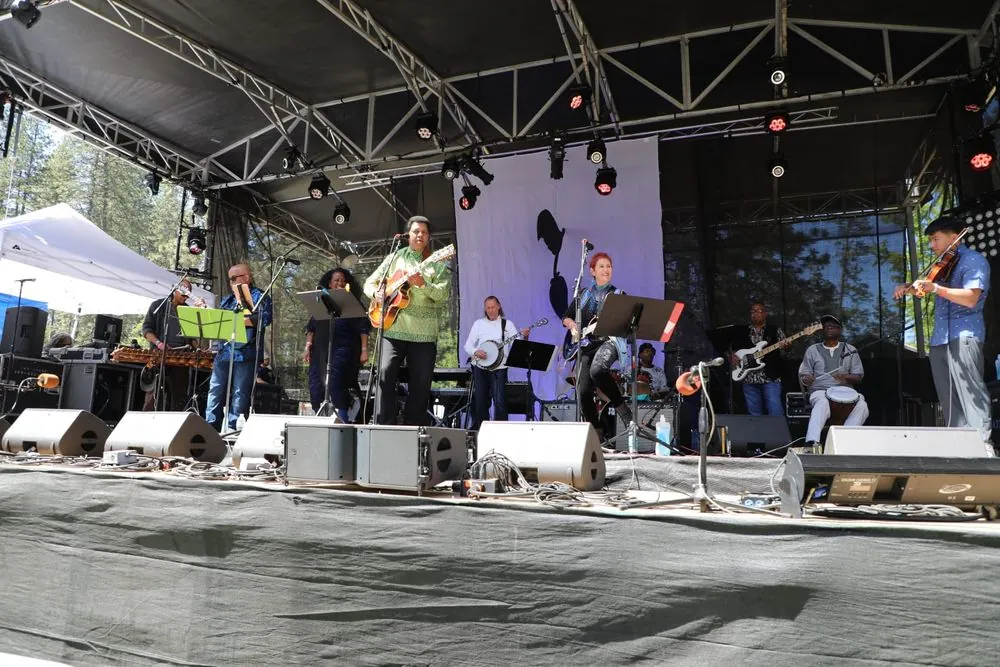
Pascal Bokar AfroBlueGrazz does not treat jazz, blues, bluegrass and West African musical traditions as sealed-off genres. Pascal’s musical background brings Mali and Senegal into conversation with American roots music, and the band’s performances make that conversation audible through rhythm, melody and improvisation.
For an audience, this makes a concert more than a chance to name instruments. It is a chance to hear what happens when musicians make space for one another and let a melody travel through different hands. The band’s concert and education programs bring that listening experience into schools, cultural spaces and community rooms. For presenters planning a live program, the live jazz band page explains how the group can bring that distinct sound to an event.
The next time you hear jazz, listen past the instrument list. Find the conversation between pulse, harmony and melody. That is where each individual sound becomes part of a band.
Frequently asked questions
What instruments are most common in jazz?
Saxophone, trumpet, trombone, piano, bass and drums are among the instruments most often associated with jazz. Guitar, clarinet, flute, vibraphone and voice also have long, important places in the music. The exact lineup changes with the style, the era and the musicians involved.
What is the rhythm section in jazz?
The rhythm section is the group that supplies harmony, pulse and momentum. Piano, bass and drums are its classic core, with guitar often sharing the harmonic role. They support the melody players, listen closely to one another and may also take improvised solos.
Can any instrument play jazz?
Yes. Jazz has always welcomed new sounds, and musicians can improvise on almost any instrument or with the voice. A listener will most often encounter saxophone, trumpet, piano, bass, drums and guitar, but the music is defined by listening, rhythm and improvisation rather than a fixed inventory.
Why is the saxophone so common in jazz?
The saxophone can project a strong melody, bend and shape notes, blend with a section and still sound highly individual in a solo. Those qualities made it central to many jazz settings, from small combos to large bands, but it is one leading voice among many.
Do jazz bands always use drums?
No. Drums are common, especially in modern small groups, but jazz has many formats. A trio may use piano, bass and drums, while other groups may perform with guitar, bass and a horn, or without a drummer at all. The arrangement decides how the pulse is shared.
Related posts
Related post
Where Did Jazz Originate? New Orleans and Its Roots
Jazz originated in African American communities in New Orleans, where blues, brass bands, Caribbean rhythms and improvisation met.
Read the article
Related post
Bluegrass Instruments: A Listener’s Guide
The six essential bluegrass instruments, banjo, mandolin, fiddle, guitar, bass and resonator guitar, and how they work together.
Read the article
Related post
What Is Bluegrass Rhythm? Hear the Drive
Learn how bass, guitar, mandolin, banjo and fiddle create bluegrass drive, and how to hear the pulse in a live string band.
Read the article