

A bluegrass band can sound like one fast-moving conversation, but every instrument is doing a different job. Once you know where to put your ear, the banjo, mandolin, fiddle, guitar and bass become easy to follow.
The bluegrass band at a glance
The traditional bluegrass lineup is a five-string banjo, flat-top acoustic guitar, fiddle, mandolin and upright bass. Smithsonian Folkways’ history of bluegrass identifies those instruments as the core of the familiar band sound, with guitar and bass forming its rhythmic foundation. That list is a useful doorway, not a purity test. A good band may add a resonator guitar or another voice, but the acoustic ensemble remains the center of the music.
The best way to recognize the lineup is to stop trying to hear every note at once. Begin with the beat underneath the song. Then listen for the sharp sound between the beats, the rolling pattern that fills the air, and the melody that rises above the group. A few focused listens reveal how much room these instruments give one another.

Start with the pulse
In most bluegrass songs, the upright bass gives you the clearest way to find the center. Its low notes arrive with a steady weight, making the beat easy to feel even when the rest of the band is busy. The acoustic guitar fills in the harmony and keeps the song moving, often with a crisp rhythm that supports the singer and soloists without asking for attention.
The mandolin often supplies the counterweight. Its short, bright chop lands on the upbeat, creating a small burst of percussion between the bass notes. Smithsonian Folkways’ teaching guide describes this chop as an upbeat pulse, and it is one of the quickest sounds for a new listener to notice. Follow the bass for the ground, then the mandolin for the lift. The rest of the band will begin to make more sense around those two points.
The banjo: motion and sparkle
The five-string banjo is often the first sound people connect with bluegrass. Its rolling picked patterns can keep a song in motion even when the singer pauses, and its high, quick notes can turn a short solo into a bright flash of melody. In a verse, the banjo may quietly fill the open spaces. In a break, it can step forward and reshape the tune while the rhythm instruments keep the ground steady.
The instrument did not begin as a bluegrass invention. Its history reaches through West African and African American musical traditions long before it became a signature sound in modern string bands. The band’s African banjo guide follows that larger story. Here, the useful listening clue is simpler: hear whether the banjo is making a constant rolling surface, answering a vocal line or taking a turn in the spotlight.
The mandolin: the chop and the melody
A mandolin has paired strings and a compact body, so its sound can cut clearly through a group without being loud for its own sake. When the player chops, the notes are short and dry. They do not ring out like a guitar chord. Instead, they mark the space between the bass notes and help the band feel organized, alert and ready to move.
Then the role can change completely. A mandolin player may take a lead break, play a fill at the end of a vocal phrase or introduce a tune with a quick melodic figure. This contrast is part of bluegrass’s pleasure. The same instrument can be a rhythmic punctuation mark one moment and a singing lead voice the next.
The fiddle: melody, response and lift
The fiddle often carries the long, singing lines in a bluegrass arrangement. Where a banjo note snaps and fades, a bow can sustain a phrase, slide into a pitch or hold a note over the band’s changing chords. That makes the fiddle especially good at answering a singer, lifting a chorus or taking a melody somewhere more open during a break.
Listen for the moment the fiddle enters after a vocal line. It may repeat the last few notes, offer a brief answer or lead the band into the next section. Its job is not always to be the loudest instrument. Often it supplies the color that makes an arrangement feel expansive without making the rhythm lose its shape.
Fiddle tunes can also give a bluegrass band a direct connection to dance music and older string-band repertory. When the fiddle leads, the melody may feel familiar enough to sing even before there are words. When it moves behind a vocalist, a short held note or a rising phrase can change the emotional temperature of the whole verse. Follow the bow for a moment and notice whether it is carrying the tune, filling an empty corner, or setting up the next soloist.
The guitar and bass: the foundation that leaves room
Bluegrass guitar is often heard before it is noticed. Its chord changes tell the song where it is going, while its rhythm helps keep the music moving forward. A guitarist may take a flatpicked break, but most of the time the instrument is doing the generous work of making space. It supplies harmony and timing without crowding the lead player.
The upright bass is equally important. Its low notes give the band a dependable center, and that steadiness lets the banjo, fiddle and mandolin take risks above it. When you are learning to hear a bluegrass arrangement, try following the bass for an entire verse. The song’s structure becomes obvious quickly. Then notice how the guitar and mandolin build a frame around it.
When the guitar does take a break, the change can be surprisingly dramatic. The player moves from marking chords to carrying a clear, flatpicked melody, while the other instruments adjust their volume and rhythm to make room. That reversal is a useful reminder that bluegrass instruments are not fixed in one role. A strong arrangement lets each one lead briefly without losing the shared pulse that makes the band sound like one unit.

Resonator guitar and other voices
Many bluegrass groups add resonator guitar, often called dobro. Its metal resonator and slide technique give it a smooth, ringing sound that can float above the band or answer a vocal with a bluesy bend. It is a common voice in bluegrass, but it is not required for every group. The same goes for a second guitar, an additional fiddle or a guest instrument.
That variation is worth welcoming. The Library of Congress overview of bluegrass describes the music as a modern string-band style shaped by older mountain music, dance fiddling, blues, gospel and country music. The lineup tells you a lot, but the arrangement tells you more. What matters is how the players share rhythm, melody and space.
What happens during an instrumental break
Picture a singer finishing a verse. The bass continues its steady pulse. The guitar holds the chord movement. The mandolin keeps its compact chop. Then the banjo takes the melody for a few measures, adding turns that fit the song rather than leaving it behind. After that, a fiddle or mandolin may take the same musical space in a different voice.
That sequence is an instrumental break. One player steps forward, but the rest of the band stays fully involved. IBMA’s youth programs teach rhythm, chopping, soloing and vocal harmony as distinct skills because bluegrass depends on players knowing when to lead and when to support. The handoff is where the music becomes a conversation rather than a collection of solos.
On a first listen, you may only hear the soloist. On the next, listen for what becomes quieter and what stays firm. The bass rarely abandons the beat. The guitar keeps the chords moving. The mandolin can reduce its chop or sharpen it to give the break more lift. By the time the vocal returns, the whole group has carried the song forward together. That is why a short bluegrass break can feel so satisfying: it offers individual expression without breaking the band apart.
Hear the connections in Pascal Bokar AfroBlueGrazz
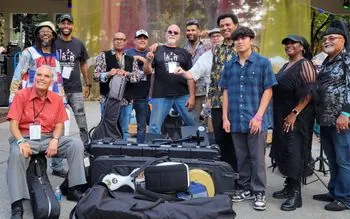
Pascal Bokar AfroBlueGrazz brings bluegrass instruments into a wider conversation with jazz, blues, Afro-funk and West African musical traditions. Pascal’s musical life and background gives that perspective its human story. It is not about placing genres in separate boxes. It is about hearing how rhythm, melody and improvisation can travel between traditions while every musician still listens to the group.
Explore the band’s recordings with this guide nearby. Start with the bass, then listen for the mandolin’s upbeat and the banjo’s motion. The concert and education programs bring those listening connections into rooms where audiences can hear the music and its history together. For another useful entry point, read the band’s introduction to bluegrass music.
A five-step listening checklist
On your next bluegrass song, find the bass before anything else. Notice the guitar’s chords moving around it. Hear the mandolin’s short chop between those beats. Follow the banjo pattern until it turns into a lead break, then listen for the fiddle’s longer answer. Finally, notice how the whole ensemble returns to the singer without losing its momentum. You do not need to name every technique. The point is to hear each player making room for the next.
Frequently asked questions
What are the main bluegrass instruments?
The typical bluegrass lineup is five-string banjo, flat-top acoustic guitar, fiddle, mandolin and upright bass. These instruments are traditionally acoustic, though many working bands add a resonator guitar or other compatible voices.
What makes the mandolin sound percussive in bluegrass?
The mandolin often plays the chop, a short rhythmic accent on the upbeat. Against the bass on the downbeat, that compact sound helps the band keep a clear pulse without a drum kit.
Is bluegrass always played by the same five instruments?
No. The five-instrument lineup is a useful starting point, not a rulebook. Bluegrass groups vary in size and may include resonator guitar, additional guitars or other instruments while keeping the acoustic ensemble at the center.
Did the banjo begin as a bluegrass instrument?
No. The banjo has a much older and wider history, with roots in African and African American musical traditions. Bluegrass later made the five-string banjo one of its most recognizable sounds.
What should I listen for during a bluegrass instrumental break?
Listen for one instrument stepping forward with the melody or a variation on it while the bass, guitar, mandolin and other players continue to hold the song’s harmony and pulse. The handoff back into the vocal or the next break is part of the excitement.
Related posts

Related post
What Is Bluegrass Music? A Listener’s Guide
A clear guide to the instruments, drive, harmony and improvisation that give bluegrass its sound.
Read the article
Related post
Where Did Bluegrass Originate? A Short History
How bluegrass took shape in Kentucky and the wider South, and why Bill Monroe’s Blue Grass Boys gave the music its name.
Read the article
Related post
African Banjo: Where Did the Banjo Originate?
The Ngoni (Ancestor of the Banjo)
Read the article