Roots of American Music

African Banjo: Where Did the Banjo Originate?

The banjo’s story begins with West African musical traditions and was remade by African people in the Caribbean and North America.

Back to Roots of American Music

The short answer is that the banjo did not simply arrive in American music fully formed. Its story begins with West and Central African musical knowledge, then takes a decisive turn in the Caribbean and North America, where enslaved Africans and their descendants made new instruments under brutal conditions. The result became one of the most recognizable sounds in American music.

The African banjo story begins before the name

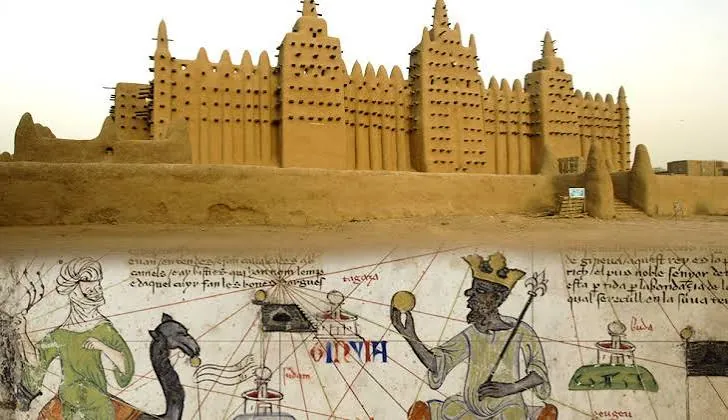
It helps to start with a correction. Asking where the banjo originated can make it sound as if there is one place, one maker and one clean handoff from an African instrument to a modern five-string banjo. History is messier and more interesting than that. The modern banjo is an American instrument, but it was created from African-rooted ideas of instrument building, rhythm and performance.

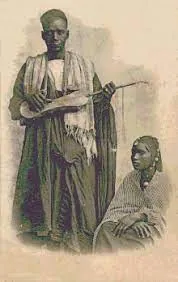
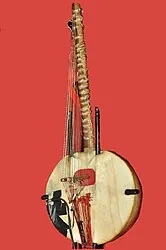
Across West and Central Africa, musicians have long played plucked lutes made with a neck, strings and a resonating body. Some use a gourd covered with animal skin; others use wood or other natural materials. They do not all look or sound alike, and none should be treated as a museum-piece prototype for every banjo that came later. What they share is a family resemblance: a stringed instrument whose voice comes from a stretched skin head and a resonating chamber.

The Smithsonian’s history of the banjo makes the essential point plainly: enslaved Africans and their descendants created the banjo in the Caribbean and colonial North America while sustaining and adapting musical traditions under slavery. That is why “African banjo” is a useful phrase only when it includes both sides of the Atlantic story: African inheritance and African American creation.

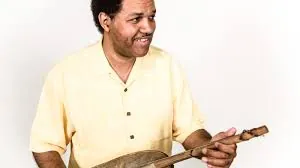
Pascal Bokar with pianist Randy Weston

From gourd lutes to a new American instrument

Early banjos were often built from materials at hand: a gourd body, an animal skin stretched across the opening, a wooden neck and strings made from available fiber or gut. Those choices were practical, but they also carried memory. Building an instrument from a gourd and skin head preserved an approach to sound that musicians knew from African traditions even when the materials, setting and social world around them had changed.

That does not mean a modern banjo is identical to an akonting, kora or any other African instrument. The point is not to flatten distinct traditions into a single origin story. The point is to recognize an ongoing process of adaptation. Musicians in the diaspora did not merely copy a remembered object. They made instruments, repertoire and playing practices that responded to their own communities and circumstances.

One commonly discussed relative is the akonting, a folk lute associated with the Jola people of Senegal and The Gambia. Its short drone string and rhythmic playing style invite useful comparison with later banjo practice. But it is more accurate to say that the banjo belongs to a broad family of African-rooted lutes than to claim one instrument as its sole ancestor. Good history leaves room for the many hands and traditions that shaped the sound.

The Caribbean and the American South were creative centers

The route from Africa to the Americas was not a straight cultural transfer. Enslaved people from many regions were forced into contact in the Caribbean and North America. They carried different languages, instruments, rhythms, songs and ways of listening. In that upheaval, music remained a way to preserve identity, build community, accompany dance and speak across distance.

Written accounts from the seventeenth and eighteenth centuries describe gourd-bodied, skin-headed instruments played by people of African descent in the Caribbean and North America. Their names vary: banza, banjar, bonjaw and other spellings appear in historical sources. The variation matters because it shows a living musical practice, not a single standardized product. The instrument was being made, named, tuned and played in different places before commercial manufacturing gave the banjo a familiar shape.

The Smithsonian Folkways teaching resource describes early banjos made by enslaved Africans as gourds covered with animal skin and fitted with a neck. That construction is a concrete bridge between West African lute traditions and the instruments that emerged in the Americas. It also reminds us that the banjo’s early history belongs to people whose names and work were too often left out of written records.

Pascal Bokar performing with the Donald Byrd Septet

Why the banjo’s Black history was pushed aside

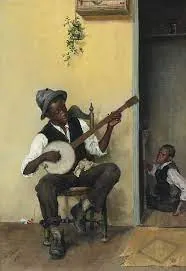
By the nineteenth century, the banjo became popular far beyond the Black communities that had made and played it. That spread brought recognition, but it also brought distortion. Blackface minstrelsy turned Black culture into a racist commercial caricature, while white performers, manufacturers and publishers helped make the banjo a mass-market instrument. The instrument’s growing popularity did not mean its creators received equal credit or equal access.

Later, the banjo became tightly associated with Appalachian music, old-time string bands and bluegrass. Those traditions are important chapters in the instrument’s history. They are not a reason to erase the earlier chapter. The fuller story holds both truths at once: the banjo has deep Black and African-rooted history, and it also became central to many regional American traditions.

The Smithsonian’s account of the banjo at a cultural crossroads traces how the instrument became bound up with African American identity and with the country’s history of racism. Understanding that context changes how we hear a banjo break. It is not just a familiar sound from one genre. It is evidence of invention, survival, exchange and, at times, appropriation.

What the banjo reveals about the roots of the blues

The banjo is an important doorway into the African roots of American music, but it is not the whole house. The blues grew from a wide field of African American musical expression: work songs, spirituals, field calls, dance music, string-band traditions, church music and the creative choices of countless individual artists. No single instrument can explain all of that.

Still, the banjo makes certain connections easy to hear. Its percussive attack, drone possibilities and close relationship to rhythm can place melody and pulse in the same gesture. In West African music, rhythm is often not background decoration. It is part of the conversation between voices, dancers and instruments. That approach traveled, changed and remained powerful in African American music.

The Smithsonian’s overview of African American music’s roots points to African antecedents for instruments including the banjo and drum, as well as musical features such as call and response. Listening for those connections is more useful than trying to prove a simple one-to-one lineage. It lets us hear how rhythm, timbre, improvisation and communal participation keep moving through different American styles.

The instrument also helps explain why genre labels can be too narrow. A banjo can sit inside a dance, a story, a lament or a party. It can carry a repeated pulse while another voice stretches against it. That flexibility has made it useful in many kinds of American music, from early Black string-band traditions to old-time music, jazz experiments, folk revival work and contemporary songwriting. The sound changes with the player, but its capacity for rhythm and conversation remains.

For listeners, this is an invitation to hear the blues and bluegrass with a wider frame. Neither tradition appeared from nowhere, and neither is less itself because it contains many histories. The most rewarding listening does not try to assign ownership to one side of a cultural line. It pays attention to the people, places and musical choices that made new forms possible.

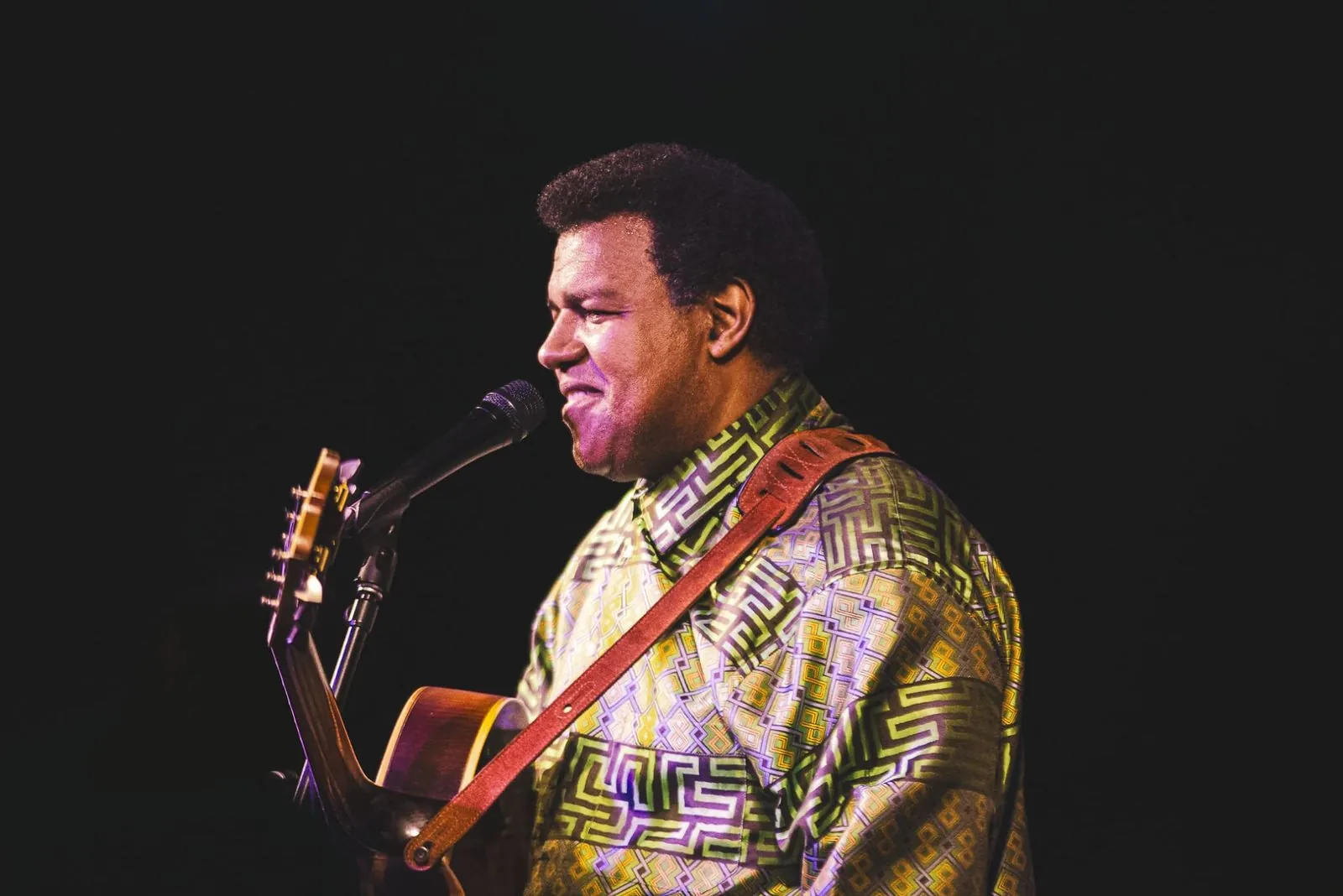
Pascal Bokar AfroBlueGrazz Band performing live

How to listen more closely

Start with the sound rather than a label. Listen to the sharp, dry attack of a skin-headed instrument. Listen for a repeated drone under a changing melody. Listen for a phrase answered by another voice, instrument or dancer. Those are not exclusive markers of one culture, but they can guide your attention toward the musical ideas that travel across place and time.

Then listen across styles. Place a West African lute recording beside an old-time banjo tune, a blues performance or a modern artist using banjo in a new way. The goal is not to force them to sound the same. The goal is to hear relationship: what changed, what stayed and what each musician makes possible in the present.

Finally, look for artists and educators who tell the history with care. A good account names the violence of slavery and minstrelsy without reducing the music to suffering alone. It also makes room for craft, joy, dance, virtuosity and imagination. That balance matters because the banjo’s story is not only about what was taken. It is also about what people made.

A useful listening exercise is to notice the role of the drone. When one note returns while a melody moves above it, the effect can be grounding, insistent or dance-like. Then notice how a performer uses tone: a plucked note can be bright, rough, dry, warm or almost spoken. These details are not history lessons by themselves, but they make the history easier to feel in real music.

It is equally useful to follow the rhythm with your body. Tap the pulse, then notice whether the melody falls directly on it or pulls around it. In many traditions, the space between those choices creates the feeling of motion. That is one reason the banjo’s history is best understood through listening as well as reading: the instrument tells part of its story in the way it makes a room move.

A living bridge, not a finished chapter

For Pascal Bokar, the connection between West African heritage and American roots is not an abstract museum subject. It is the musical ground beneath the work: rhythm, melody, storytelling and the conversation between African traditions, blues, bluegrass and jazz. That perspective is present in the band’s music and in Pascal’s education programmes, where a performance can become a deeper conversation about culture and sound.

Listeners, presenters and educators who want to bring that conversation into a room can explore the band’s recorded music, read about the music and education programmes, or ask about bringing Pascal Bokar AfroBlueGrazz to an event. The point is not to turn history into a sales pitch. It is to keep the history audible, connected to the living musicians who carry it forward.

Frequently asked questions

Did the banjo come from Africa?

The modern banjo was developed in the Caribbean and North America by enslaved Africans and their descendants, drawing on West and Central African instruments and musical knowledge. It is both an African-rooted and an African American instrument.

What African instrument is related to the banjo?

There is no single direct parent, but West African plucked lutes with skin-covered gourd bodies are important relatives. The akonting of the Jola people of Senegal and The Gambia is often discussed because of its short drone string and playing approach.

Why is the banjo associated with bluegrass?

The banjo became central to American string-band music through a long, complicated history that includes Black musical invention, minstrel performance, commercial popular music, old-time traditions and the later rise of bluegrass. That association is real, but it is not the whole story.

How does African musical heritage connect to the blues?

The connection is broader than any one instrument. Call-and-response, rhythmic layering, timbre, improvisation and dance-centered performance all helped shape African American musical traditions, including the blues and the music that followed it.