The short answer: the blues developed in African American communities in the United States, especially across the South. The Mississippi Delta became one of its most influential homes, while the music carried deep continuities with West African ways of making rhythm, melody and story.
A new music made in the American South
The blues did not arrive as a finished sound from one place. It emerged through the lives of Black Americans after emancipation: people making music in homes, churches, fields, on street corners, at gatherings and in the places where work and social life met. Smithsonian Folkways describes the late nineteenth and early twentieth centuries as the period when the blues developed across African America after emancipation. That matters because the blues is not simply a style of sad songs or a twelve-bar pattern. It is a form of expression made from experience, memory, rhythm and improvisation.
So when people ask where the blues originated, the most accurate answer begins with African American life in the South. The sound took shape in more than one community, and it changed as musicians travelled. The Smithsonian Folkways history of Black music places its development in the decades after emancipation, alongside other vital African American popular forms.
The roots reach back across the Atlantic
Calling the blues an African American creation does not erase its African roots. It makes those roots easier to understand. Enslaved Africans and their descendants maintained musical values and practices while building new lives under brutal conditions in the Americas. In its teaching material on the subject, Smithsonian Folkways points to West African musical aesthetics and to field hollers and ring shouts as important precursors to the blues.
Listen for the conversation rather than a single borrowed ingredient: a voice answered by another voice, rhythm that pulls against a steady beat, flexible pitches, repeated lines that gain force through variation, and improvisation that lets a performer shape a story in the moment. These are not museum pieces. They are ways of organising sound, and they remained alive as Black communities created new music in the United States.
A field holler was not a blues song in the modern sense. Neither was a ring shout. They belong to their own histories and functions. But both help listeners understand why the blues could make so much meaning with a voice, a pulse and a few notes. A singer could bend a pitch until it felt unsettled, repeat a phrase until it became a statement, or let the silence after a line say as much as the words. That expressive freedom sits at the heart of the blues.
It is also important not to reduce Africa to a distant starting point. West African music contains many distinct peoples, languages, instruments and approaches to rhythm. The connection to the blues is not a claim that one African genre simply crossed the ocean unchanged. It is a story of continuity, adaptation and invention. Black musicians in America made new forms from what they remembered, what they heard around them and what their own lives demanded.
That long view also explains why instruments matter. The African banjo story follows one visible connection between West African string traditions and American music. The blues was larger than any one instrument, but the portable guitar, voice and home-made instruments gave many musicians practical ways to carry a whole band of feeling in a small space.
Why the Mississippi Delta matters
The Mississippi Delta is rightly central to the story, though it is not the only place where the blues developed. The region became a powerful setting for early country blues because its Black communities created music amid the harsh realities of Reconstruction’s collapse, sharecropping, segregation and racial violence. Smithsonian Folkways describes this environment as the one in which early Delta and Piedmont country-blues styles developed.
Delta blues is a regional style rather than the entire blues tradition. The Library of Congress describes it as a country-blues form associated with acoustic guitar, solo voice and sometimes harmonica. Its stripped-down sound made room for a singer’s timing, phrasing and guitar response to become as expressive as a larger ensemble.
The word “Delta” can make the story sound geographically simple, but the musical world was never isolated. Workers, families and musicians moved through rural roads, river towns, rail lines and growing cities. Songs travelled in memory before they travelled on records. A lyric could be reshaped for a new performer or a new place. A guitar figure could move from a porch to a juke joint, then later to a studio. The region mattered because it was a meeting ground for people, work, commerce and music, not because it contained one sealed-off sound.
That is why a blues map has more than one centre. The Mississippi Delta is essential, but so are the Piedmont, Memphis, Texas, Louisiana and other local traditions. The question “where did the blues originate?” asks for a place, yet the answer is also a network of Black communities across the South. Each scene gave musicians a different accent, repertoire and way of playing.
What early blues sounded like
Early blues was not locked to one chord sequence, vocal sound or instrument. A performer might sing alone, accompany themselves on guitar, play with another musician, use a harmonica or reshape a familiar lyric for a different room. The blues became recognisable through the relationship between voice, rhythm, repetition and change. A repeated line can return as a thought, then a guitar answer can turn it into a question, an ache or a joke.
The best way to hear the connection is to listen for movement. A line does not have to land on the cleanest note. A beat does not have to sit still. The performer can stretch a phrase, answer it with a riff, leave space, then bring the room back together. That freedom is one reason the blues could travel so far: it is a form with a clear character and enough openness for each musician to sound like themselves.
The familiar twelve-bar blues is one useful framework, but it is not the whole definition. Some early performances use other lengths and harmonic patterns. What stays recognisable is the way the music speaks. Blues singers can deliver an intimate confession, a warning, a boast, a comic turn or a social observation with the same economy. The guitar is not merely accompaniment; it can echo the voice, interrupt it, answer it or take over the sentence.
For listeners, this is a better starting point than treating the blues as a checklist of chords. Pay attention to tone, timing and interaction. Notice how a phrase changes the second time it arrives. Notice how the rhythm creates tension before it settles. These details show why the blues could become a foundation for so many later styles without ever losing its own identity.
From the Delta to cities and the wider world
Recording changed the reach of the blues, but movement had already been part of its life. The Library of Congress notes that Delta musicians such as Tommy Johnson, Robert Johnson, Ishmon Bracey and Charley Patton were recorded in the 1920s and 1930s. In later decades, musicians from the Delta moved to places including Memphis, Detroit and Chicago, adapting their music to urban audiences and electric instruments.
That journey did not replace the earlier sound. It multiplied it. Delta blues, Memphis blues, Chicago blues, electric blues, rhythm and blues, rock and jazz all show what happens when artists carry an expressive language into a new setting. The Library of Congress history of Delta blues traces this shift from early recordings to the city-based electric styles that influenced later American music.
Why the story is still worth hearing
Blues history gets flatter when it is told as a single line from “Africa” to “America,” or as a single legend attached to one town. The fuller story is more interesting. It honours the West African continuities that survived and changed, the African American communities that made a new art form, and the local scenes that gave the blues its many voices.
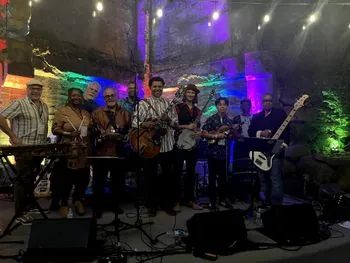
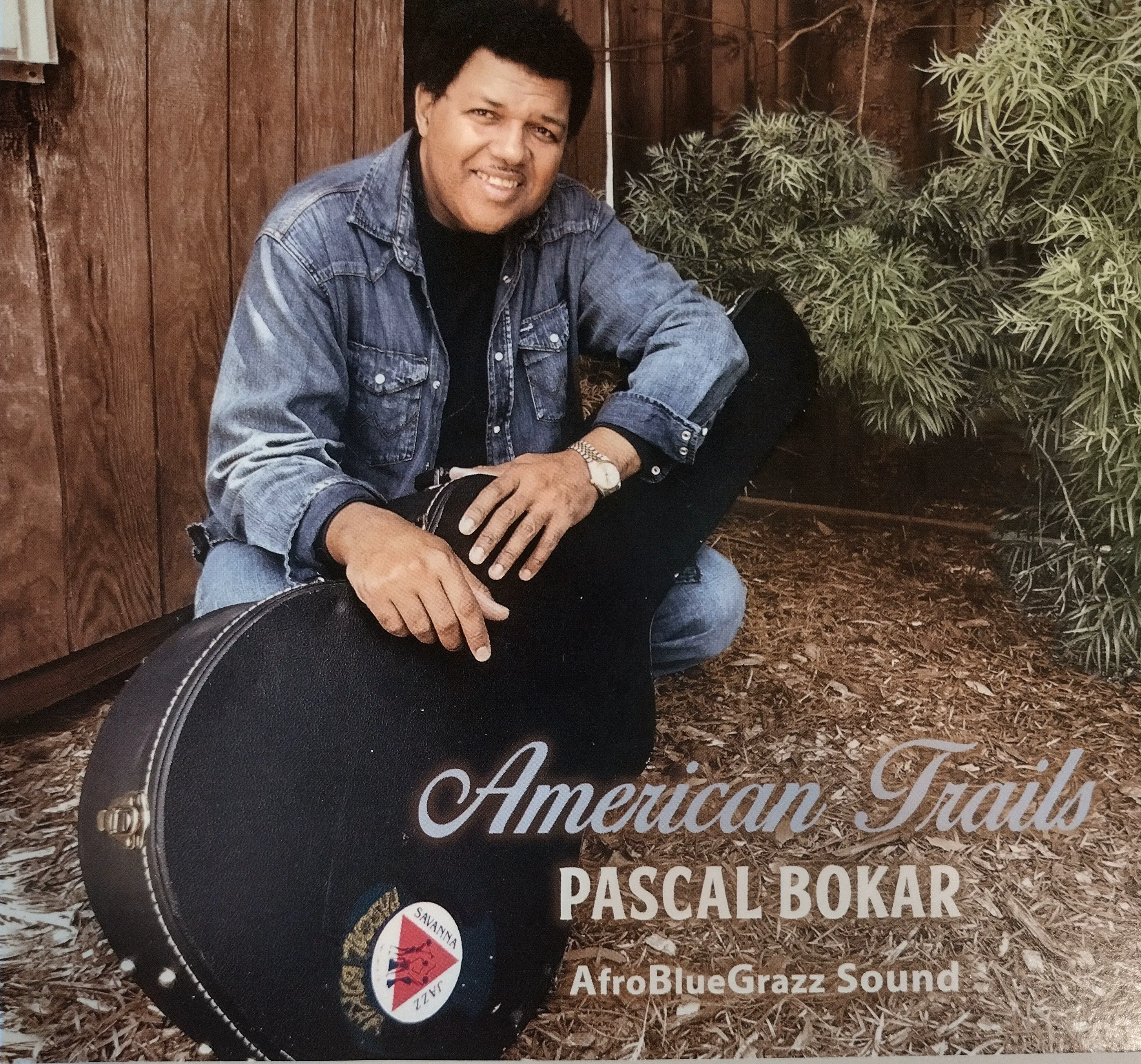
That is also the musical world behind Pascal Bokar AfroBlueGrazz. Pascal’s life and work connect Mali and Senegal with American roots music, while the band’s recordings keep that conversation moving in the present tense. For a deeper live exploration of these connections, the band’s concert and education programmes bring music, cultural history and performance into the same room.
Hearing the blues this way changes what we listen for in the present. It asks us to recognise both inheritance and authorship: the endurance of West African musical ideas, and the brilliance of Black American artists who made a new language from them. It also gives listeners a better way to approach recordings: not as relics, but as choices made by artists whose phrasing, tone and imagination continue to speak. That is a richer story than a single birthplace claim, and it gives the music the attention it deserves.
Frequently asked questions
Did the blues originate in Africa?
The blues developed as an African American musical form in the United States. Its creators carried and transformed musical ideas with deep West African continuities, but the blues itself took shape in Black communities in the American South.
Where did Delta blues originate?
Delta blues originated in the Mississippi Delta, a region between the Mississippi and Yazoo Rivers. It is one early country-blues style, recognised for its strong vocals, guitar and sometimes harmonica.
When did the blues begin?
There is no single birth date. The late nineteenth century is a useful marker for the emergence of the blues, with recordings in the 1920s and 1930s helping the music travel far beyond its Southern home.
What music influenced the blues?
The blues grew from African American work songs, field hollers, spirituals, ring shouts and folk practices, while also absorbing elements encountered in the United States. It was a living creation, not a fixed formula.
How did the blues get to Chicago?
During the Great Migration, many Southern Black musicians moved to cities including Memphis, Detroit and Chicago. There they adapted their sound to louder rooms, new audiences and electric instruments, creating influential urban blues styles.