Jazz originated in African American communities in New Orleans. It was not created in one room, by one musician or on one exact date. It grew as people brought rhythm, memory, instruments and imagination into a city where music was part of daily life.
The short answer: New Orleans
When people ask where jazz originated, New Orleans is the essential answer. Around the turn of the twentieth century, Black musicians in the city made something new from sounds already alive around them: blues, ragtime, spirituals, brass-band marches, dance music and rhythmic traditions carried across the Atlantic and the Caribbean. The Smithsonian’s history of jazz places the music’s early development in New Orleans, where African American creativity gave this blend its character.
That answer needs one important refinement. Jazz was not simply a mixture waiting to happen. African American musicians made choices: how to bend a note, where to place a beat, how one horn should answer another, when to hold a phrase back and when to let it rush forward. Those choices turned many ingredients into a distinct musical language.
So it is more accurate to say that jazz was created in New Orleans by African American communities, while drawing on a wide field of musical knowledge. The city mattered, but so did the people whose lives, celebrations, labour, faith and social gatherings made that musical world possible.
Why New Orleans was the right place
New Orleans was a port city with deep connections to the Caribbean, Africa, Europe and the rest of the United States. French, Spanish, African, Caribbean, Creole and Anglo-American traditions met there in ways that were unusual for the era. The National Park Service notes that the city’s cultural diversity, active nightlife and many opportunities for musicians to work created the setting for early jazz to develop.
Music was not separate from ordinary life. Brass bands played parades, funerals, picnics, store openings, political events, weddings and dances. Social aid and pleasure clubs created work for musicians and drew whole neighbourhoods into the street. In those spaces, music had to move people. It needed a pulse strong enough for a procession, enough flexibility for dancers, and enough invention to keep familiar songs alive.
That practical musical life helps explain why early jazz feels communal. The sound was not designed for a silent concert hall. It belonged to rooms, streets, celebrations and rituals where listeners could respond, dance and join the atmosphere around the band. New Orleans gave musicians a place to hear each other often, borrow ideas freely and turn a local sound into a lasting art form.
Congo Square and the survival of rhythm
Any honest account of jazz has to begin with the African American experience under slavery and after emancipation. In New Orleans, enslaved people were documented gathering on Sundays at what later became known as Congo Square. The National Park Service’s history of jazz in New Orleans describes the site as an important setting for African dance, drumming and the preservation of cultural elements.
Congo Square was not a jazz club before jazz existed, and it would be careless to treat it as a simple origin point. Its importance lies in what it represents: African-descended people keeping rhythm, movement and communal expression alive under conditions designed to strip them away. Those practices did not remain frozen. They changed as communities changed, travelled through churches, street life, social gatherings and later musical forms.
Listen for these continuities in the values of the music rather than in a single borrowed rhythm. Call-and-response, layered rhythm, flexible phrasing and an expressive relationship between voice and instrument all became part of the ground on which jazz grew. Jazz is an American creation, but its creators carried deep African inheritances into that creation.
Blues, ragtime and brass bands
Jazz did not replace the music around it. It learned from it. The blues brought a powerful vocal feeling, flexible pitches and a way of making a repeated phrase say more each time it returned. Ragtime offered syncopation and a popular piano language. Brass bands brought horns, parade repertoire and the collective sound of cornet, clarinet and trombone moving through the same tune together.
Early New Orleans musicians played across these settings rather than staying inside one neat category. A player might be needed for a parade one day, a dance the next and a funeral after that. The National Park Service describes how brass-band instrumentation and African American improvisational approaches increasingly shaped the dance bands around the turn of the century. That exchange is a key part of the story: written arrangements, popular songs and street rhythms became material for musicians to reshape in real time.
The National Jazz Curriculum’s overview of jazz origins puts it plainly: the music developed in New Orleans from African and European traditions, but it evolved through the African American experience in the United States. That is the centre of the story, not a footnote to it.
No single inventor, no single start date
Because jazz grew through a community, it does not have one inventor. Stories sometimes name Buddy Bolden, Jelly Roll Morton or Louis Armstrong as the person who “started” jazz. Each deserves attention, but each played a different role in a music that was already taking shape among many musicians. Bolden was remembered by later players for an unusually forceful, improvised cornet style in the 1890s. Morton became a major composer and pianist whose pieces helped define the early repertory. Armstrong transformed the role of the soloist and changed what later jazz musicians believed an instrumental voice could do.
Those achievements matter without reducing the story to a hero list. Musicians learned from bands, family, churches, street parades, dance halls and one another. Many of the people who shaped the sound were never recorded, named in newspapers or credited by the growing music industry. Treating jazz as a collective creation makes room for that larger truth.
The same caution applies to dates. A 1917 record helped introduce the word “jazz” to a national market, but a record is not a birth certificate. The National Park Service notes that early New Orleans jazz had been developing before commercial recordings made it widely heard. The more useful question is not “what exact day was jazz born?” but “what conditions allowed a new music to emerge?” In New Orleans, African American musical knowledge, regular performance opportunities and a culture of shared listening gave that music room to grow.
What made the new sound different
Early jazz could be recognised by the way musicians treated time and conversation. Instead of simply reproducing a score, players shaped a melody together. One horn might state the tune while another decorated it and a trombone pushed underneath. The ensemble created a moving, sometimes rough-edged weave of sound. This collective improvisation was one of the signatures of early New Orleans jazz.
Improvisation does not mean playing without knowledge. It means knowing a song, a rhythm and a set of musical relationships well enough to make choices in the moment. A player can alter the timing of a phrase, answer a vocalist, leave room for another musician, twist a familiar melody or find a new path through a chord. That human presence is why jazz can feel different each time it is played.
Rhythm is equally important. The beat does not simply sit in one place. It can lean forward, relax behind the pulse or create tension between the players. That motion became central to swing. The result is music that asks the listener to participate, even quietly: to feel where the phrase lands, notice the response and recognise the shape of a solo as it unfolds.
From New Orleans to the world
Jazz soon travelled beyond its birthplace. New Orleans musicians worked on riverboats and touring shows, then carried the music to Chicago, New York and other cities. The first commercial jazz recording appeared in 1917, but recording should not be confused with creation. The music had already been developing in New Orleans communities for years before the record industry labelled and sold it.
As musicians moved, the music changed. Chicago amplified the role of the soloist. New York became a major centre for arranging, big bands and the Harlem Renaissance. Later generations developed swing, bebop, hard bop, free jazz, fusion and countless other directions. The National Jazz Curriculum’s early-jazz history traces that path from New Orleans to Chicago, New York and the wider country.
None of that makes New Orleans less important. It makes the city’s contribution clearer. Jazz began as a local language with enough depth and openness to travel, absorb new voices and remain recognisable. It became a world music because its earliest musicians built invention into the form.
Hearing the roots in the music now
The origin story matters because it changes how we listen. Jazz is not only a collection of famous standards or a polished concert tradition. It is a living record of Black American creativity, shaped by African continuities, New Orleans community life and generations of musicians who found new ways to speak through sound.
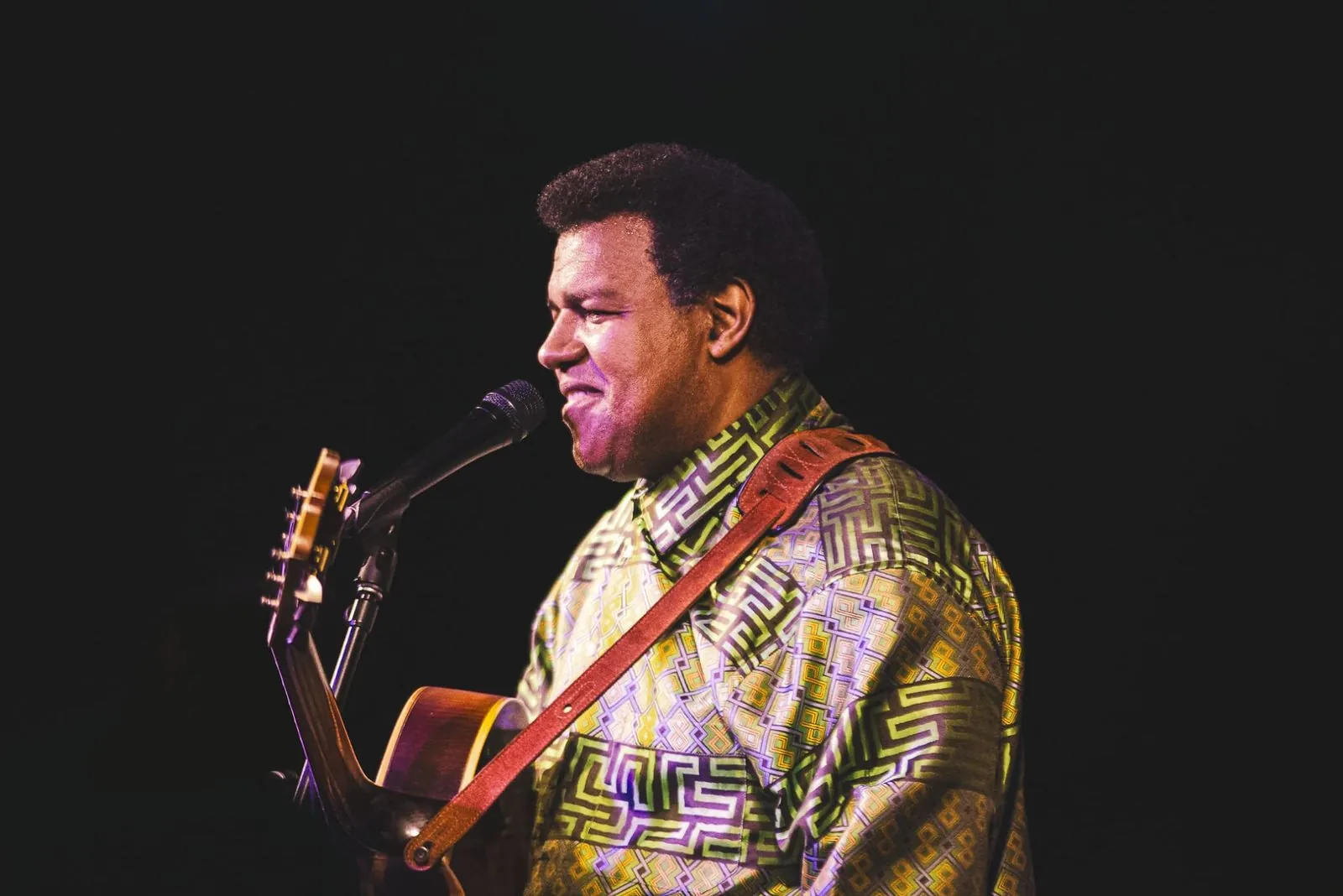
That conversation is central to Pascal Bokar AfroBlueGrazz. Pascal’s story and musical work connect Mali and Senegal with jazz, blues, bluegrass and Afro-funk. The band’s recordings keep those conversations active, while the education programmes bring performance and cultural history together for audiences, schools and presenters.
For a fuller picture, continue with the history of where the blues originated and the story of the African roots of the banjo. Each begins in a different place, but together they reveal a larger American music story built through memory, movement and invention.
Frequently asked questions
Where did jazz originate?
Jazz originated in African American communities in New Orleans, Louisiana, in the late nineteenth and early twentieth centuries. The city brought together Black musical expression, Caribbean influences, brass-band culture, blues, ragtime and European instruments.
Who invented jazz?
No single person invented jazz. It was created collectively by African American musicians and communities in New Orleans, then developed by artists including Buddy Bolden, Jelly Roll Morton, King Oliver and Louis Armstrong.
Did jazz come from Africa?
Jazz was created in the United States, but it carries important continuities with many African musical traditions, especially in rhythm, call-and-response and improvisation. It also drew on blues, ragtime, brass bands and European harmony.
Why is New Orleans called the birthplace of jazz?
New Orleans was a port city where African American, Caribbean, Creole and European traditions met. Its parades, social clubs, dance halls, funerals and neighbourhood bands gave musicians frequent chances to learn from one another and create a new sound.
What came before jazz?
Jazz grew from a rich musical environment that included African American spirituals and blues, ragtime, brass-band marches, dance music and Caribbean rhythms. Those ingredients changed when musicians began combining them through collective improvisation and swing.