
Jazz improvisation is not a musician wandering alone without a map. It is a conversation made in real time: a tune gives the group a common shape, the rhythm section creates motion, and each player listens closely enough to answer what has just been said. Once you hear that shared attention, a solo becomes much easier to follow.
Improvisation begins with a shared frame
Improvising does not mean that nothing has been prepared. In many jazz performances, the band begins with a melody, often called the head. The tune has a recognizable form, a sequence of harmonies and a pulse the musicians agree to hold together. Those elements are not limits on imagination. They are the ground that makes a surprising phrase meaningful. When a saxophone, guitar or voice departs from the melody, the listener can still feel the shape it is traveling through.
Think of a good conversation among friends. No one has memorized a script, but everyone knows the subject, hears the tone of the room and responds to what the previous person has said. Jazz works in that space between preparation and discovery. A player might enter with a phrase learned over years of practice, alter its rhythm after hearing the drummer’s accent, then leave room for the pianist or bass player to change the direction.
The Smithsonian’s introduction to jazz places improvisation alongside swing, blue notes and call-and-response as a central part of the music. For listeners, the useful point is simple: a jazz solo has a setting. Find the melody, the pulse or the returning harmonic motion first, and the freedom inside a solo will start to feel purposeful rather than mysterious.
Jazz improvisation grew from collective music-making
Jazz developed in African American communities in New Orleans, where musical practices from the African diaspora met blues, brass-band music, ragtime, Caribbean influences and European instruments. That history matters because improvisation was never only a display of individual cleverness. It was also a social practice, built through rhythm, dance, memory, response and the ability to make music with other people in the same moment.
Early New Orleans ensembles often featured several musicians shaping the texture at once. A trumpet might carry the main line while clarinet and trombone moved around it, each adding a distinct role. The Library of Congress describes how early jazz musicians drew on a city where different musical traditions were in close contact, and its collection on New Orleans music history traces the city’s long exchange between African and European musical worlds.
That does not mean every early performance was spontaneous from beginning to end. Arrangements, recurring phrases and rehearsed sections have always been part of jazz. The distinction is more interesting than a simple prepared-versus-free divide. Musicians can use an arrangement to create a frame, then make decisions inside it. The Library of Congress essay on Jelly Roll Morton’s “Black Bottom Stomp” shows how composition, repeated themes and variations can work together in early jazz.
As jazz traveled and changed, so did the balance between collective texture, arranged writing and individual solo space. A small group could make room for one musician to take several choruses. A big band could use written sections to frame brief, vivid solos. The essential habit remained listening. Each format asks players to know when to lead, when to support and when to leave a useful opening.
A solo is built from phrases, not random notes
A strong improvised solo usually sounds like speech because it has phrases. A musician states a short idea, repeats it, changes its ending, shifts it into another register or lets it answer a phrase that came just before. That is why a listener can follow a great solo without naming the scale or chord underneath it. You are hearing an idea develop.
Start with repetition. If a player gives you a three- or four-note shape, listen for it again. The second appearance may be quieter, faster, moved higher or set against a different rhythm. Then notice contrast. A busy run may be followed by one long held note. A loud statement may be answered with a soft chord. These choices create tension and release, just as a storyteller varies sentence length and leaves room for an important thought to land.
There is room for virtuosity in jazz, but speed is not the definition of improvisation. A player who uses three notes with exact timing can make a whole band lean in. The question is not, “How many notes did the soloist play?” It is, “What idea did the soloist make the group hear, and what happened to that idea next?” That question makes even a complex performance more welcoming.
The rhythm section keeps the conversation moving
When one musician takes a solo, the rest of the band is not waiting passively. Bass, drums, piano and guitar keep the music alive through pulse, harmony, color and response. The bass may walk steadily through the form, helping the soloist and listener feel where they are. The drummer can use cymbal, snare, bass drum or brushes to lift a phrase, mark a transition or open up a quieter space.
Piano and guitar add another kind of response. They can play chords that clarify the harmony, choose lighter voicings to avoid crowding a solo or offer a brief rhythmic answer. Jazz musicians call this kind of supportive chordal interaction comping. It is not background in the dull sense. It is active attention. One well-placed chord can invite a soloist toward a new color; one moment of silence can make the next phrase more visible.
The band’s guide to jazz instruments is useful here because it shows how each voice can change jobs during a performance. A guitar can be rhythmic one moment and melodic the next. A drummer can hold a light pulse while also answering a soloist. As you listen, try choosing one supporting player for a minute. You will begin to hear how the solo is being shaped from all sides.
Call and response keeps the band connected
One of the clearest signs of improvisation is call and response. A horn plays a compact phrase, and another instrument answers. A singer leaves a gap that the band fills. A drummer responds to the end of a guitar line with a sharp accent. These exchanges can be obvious or almost whispered, but they make the performance feel shared rather than stacked from separate individual turns.
Call and response has deep roots in African and African American musical practices. In jazz, it helps create a feeling that the band is alert to every turn. The soloist has a little more courage to take a risk because the group is listening. The group has a reason to stay inventive because a phrase from the front line might ask for an answer at any instant.
For a listener, response is a gift. It gives you something concrete to hear. Instead of trying to absorb every sound at once, notice the handoff: who starts the idea, who echoes it, who changes it and who creates space around it. This is why a live performance can feel different each night, even when the title of the tune and the musicians onstage are the same.
Space gives an improvised solo its shape
Silence is not an absence of music. In jazz, space can make a rhythm more legible, give a phrase time to settle or invite another musician into the exchange. A soloist who leaves a breath after a strong idea is not running out of material. The pause may be the material. It asks the room and the band to listen harder.
Space also keeps an ensemble from becoming a wall of sound. When a guitarist takes a solo, the pianist may use fewer notes. When a singer stretches a line, the drummer may soften the cymbal pattern. When the bass plays a clear melodic figure, the rest of the band may leave it visible. These choices are a form of generosity. They let individual voices remain distinct while preserving the group’s motion.
The result is a practical listening exercise. During a solo, do not only notice what is played. Notice the gaps. Does the band fill them, let them hover or use them to begin a new section? Hearing those decisions is one of the quickest ways to move from “I hear a lot happening” to “I hear musicians making a piece together.”
How to hear improvisation in five minutes
Use this short approach with a recording or a live set. It does not require theory, and it works with a jazz standard, a blues, an Afro-Cuban groove or an original piece.
- Find the tune: Listen for a melody or repeated musical shape before the solo begins.
- Choose one soloist: Follow one phrase rather than every note. Hear whether it repeats, changes or pauses.
- Locate the pulse: Keep the bass, drums, guitar or piano rhythm in the edge of your attention.
- Catch one response: Notice a chord, drum accent, echo or silence that reacts to the solo.
- Wait for the return: When the melody comes back, notice how the journey through the solos changed the way it feels.
The first listening does not need to reveal everything. On a second pass, follow a different player. That is not homework. It is an invitation to hear a performance from another seat in the room. The band’s how to listen to jazz guide offers another simple way to follow pulse, melody and the ensemble’s answers.
Hear the conversation in Pascal Bokar AfroBlueGrazz
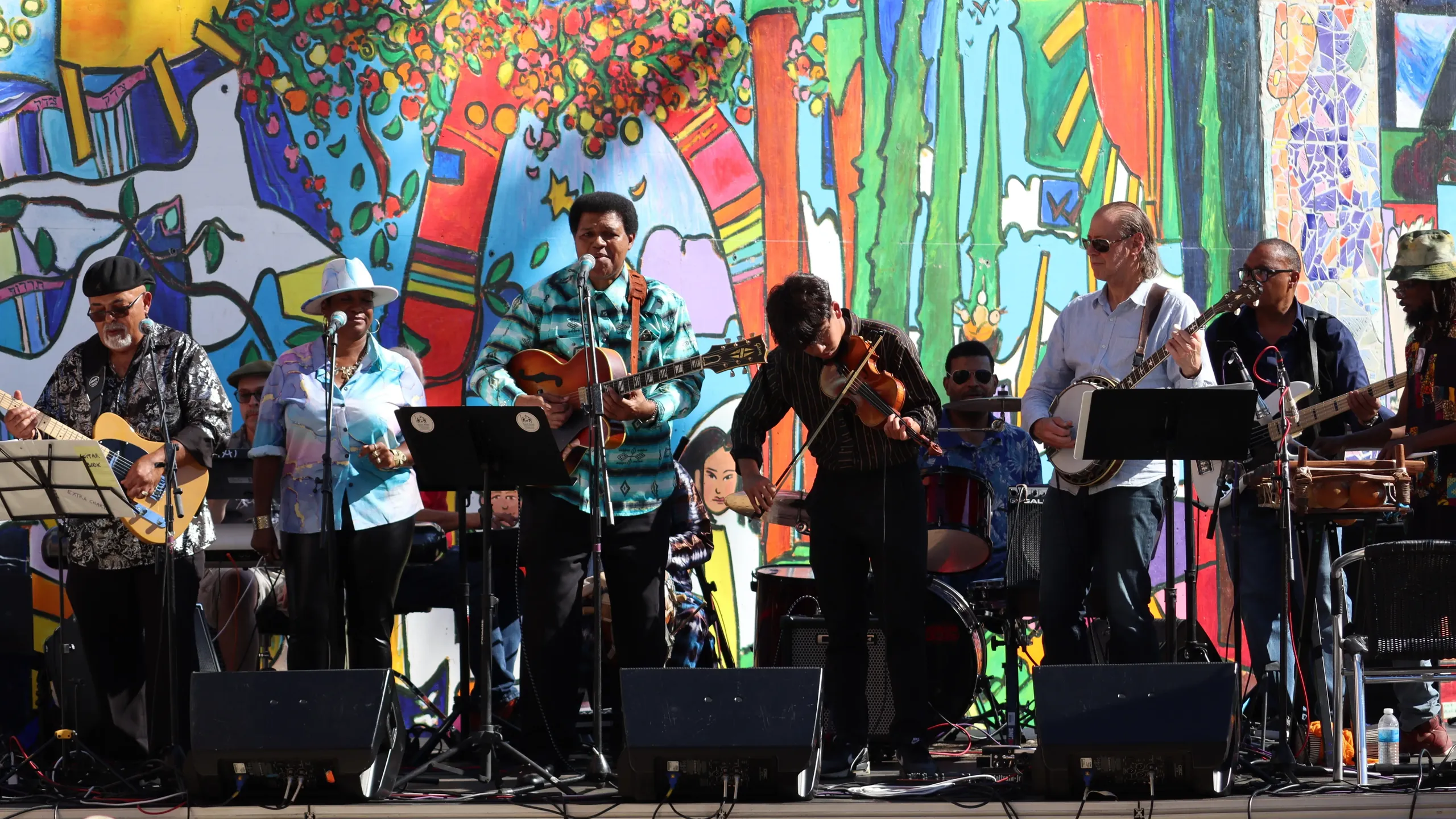
Pascal Bokar AfroBlueGrazz brings jazz improvisation into contact with blues, bluegrass, Afro-funk and West African musical traditions. Pascal’s musical background and the group’s working sound make space for rhythm, melody and improvisation to move between traditions without treating any of them as fixed museum pieces.
On the band’s recordings, listen for the same essentials: a grounded pulse, a phrase that develops, a response from another player and the way the ensemble makes room for a new turn. The concert and education programs make those connections especially useful for audiences and students, pairing performance with active listening and musical history. Presenters can explore the live jazz band programme when they want to bring that experience into a cultural event, school or community space.
Frequently asked questions
Is jazz improvisation completely made up?
Jazz improvisation is made in the moment, but it is rarely unplanned in the sense of having no structure. Musicians work with a tune, a pulse, a form, harmony and a shared style of listening. Preparation gives them more choices when the performance begins.
Do jazz musicians play the same solo twice?
They may return to favorite phrases, but the exact solo changes with the tempo, the room, the arrangement and the other musicians. A live performance stays alive because each player hears and answers what is happening now.
What is a jazz chorus?
In jazz, a chorus is usually one trip through a tune’s full form. During a solo, a musician may take several choruses, creating new phrases over the same underlying harmonic and rhythmic shape.
Why is silence important in jazz improvisation?
Space gives a phrase shape and gives the band something to answer. A pause can make a rhythm clearer, let a harmony settle or create anticipation before the next idea.
Can a beginner hear jazz improvisation?
Yes. Start by noticing when the melody changes into a solo, then listen for a phrase that repeats, develops or receives an answer from another player. You do not need to identify every chord to hear the conversation.
Related posts
Related post
How to Listen to Jazz: Find the Conversation
A listener’s guide to finding the pulse, following the tune and hearing the conversation inside a jazz performance.
Read the articleRelated post
What Instruments Are Used in Jazz? A Listener’s Guide
Meet the saxophone, trumpet, piano, bass, drums, guitar and more, then learn how each voice helps a jazz band move, listen and improvise.
Read the article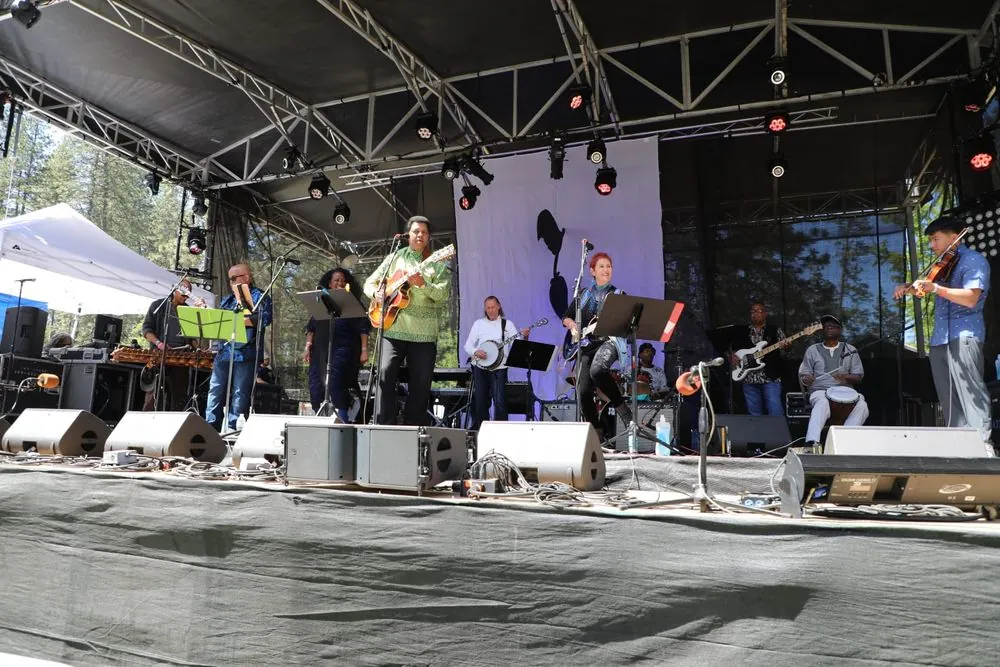
Related post
Where Did Jazz Originate? New Orleans and Its Roots
Jazz originated in African American communities in New Orleans, where blues, brass bands, Caribbean rhythms and improvisation met.
Read the article