
You do not need to know every chord, player or style to enjoy jazz. Start by finding the pulse, then follow the melody and notice how the musicians answer one another. Jazz becomes easier to hear when you treat it as a live conversation rather than a puzzle to solve.
Begin with one thing, not everything
It is easy to feel lost when a jazz group seems to be doing several things at once. A drummer keeps the air moving, a bassist marks the ground, a pianist adds color, and a horn or guitar turns toward a new idea. The listener does not have to hold all of that at once. Pick one element for a few moments, then let another one come into focus.
That is not a shortcut. It is how close listening works in any rich ensemble music. The first pass might be about the beat. The next might be about the melody. On another listen, you may notice a quiet piano chord that changes the mood or a cymbal accent that sends a soloist in a new direction. Familiarity does not make a jazz performance smaller. It gives you more places to enter.
Jazz is also not one fixed sound. The Smithsonian’s introduction to jazz identifies improvisation, swing, blue notes and call-and-response as central elements, but those elements appear in many different combinations. A small acoustic group, a big band, a vocalist with piano or a rhythm-heavy ensemble can all invite a different kind of attention.
First, find the pulse
Before following a solo, find the steady motion underneath it. You may hear it most clearly in the bass, in a ride cymbal, in a guitar rhythm or in the pianist’s left hand. Tap a foot if it helps, but do not worry about counting. The point is to feel where the group agrees the music is moving.
In jazz, that shared pulse is rarely mechanical. A drummer may make the cymbal line float. A bassist may walk through the harmony with notes that pull the music forward. A guitarist or pianist may place chords slightly ahead of or behind the beat. Those small choices create energy without breaking the group apart. When people describe a band as swinging, they are often responding to that combination of steadiness and lift.
Try a simple experiment. For the first minute of a recording, stay with the lowest instrument or clearest rhythmic sound. When the melody arrives, keep the pulse in the background of your attention. You will hear that the solo is not floating alone. It has a moving floor beneath it.
Then, listen for the tune
Most jazz performances give the listener a melody to hold onto. Musicians often call it the head. It may arrive at the beginning, return at the end and reappear in fragments during a solo. You do not need to know the tune’s name. Just notice the phrase that sounds most singable, and remember its contour: does it rise, fall, pause, repeat or turn unexpectedly?
The melody is the group’s common reference point. The players may move far from it while improvising, but they are still sharing its form and its harmonic path. That is why a tune can sound both recognisable and new each time it is performed. The song gives the band a shared starting place. The performance shows what these particular musicians choose to do with it today.
If the melody feels unfamiliar, give it time. Listen once for the broad shape, then again for a short phrase. A strong jazz melody often becomes memorable after you hear the rhythm section make room around it and the soloists return to it from different angles.

Hear improvisation as a story, not a guessing game
Improvisation can sound intimidating because it happens in the moment. In practice, it is often easier to follow when you stop trying to predict the next note. Listen for a phrase that catches your ear. Does the musician repeat it? Change its rhythm? Move it higher or lower? Leave space after it? Those are the same storytelling tools a speaker uses when shaping an idea for an audience.
A soloist is not starting from nothing. The tune, harmony, pulse and the other players all provide material. The National Jazz Curriculum’s overview of jazz origins describes improvisation as one of the music’s defining practices. For a listener, the important thing is not to identify a scale. It is to hear a musician make choices and let one phrase lead naturally to the next.
Listen for contrast. A player may begin with a quiet, spare idea and build intensity over several choruses. Another may answer a busy line with silence. A short repeated phrase can become more urgent every time it returns. These changes make an improvised solo feel like a journey rather than a collection of impressive notes.
Pay attention to the answers around the solo
Jazz becomes especially vivid when you hear what the rest of the band does while one musician is in front. A pianist might place a bright chord under a trumpet phrase. The drummer may answer a pause with a soft splash of cymbal. The bass might simplify its line to create more space, then become more active as the solo grows.
This exchange is often called call-and-response. It has deep roots in African and African American musical traditions, and it helps explain why jazz can feel communal even when one player is soloing. The soloist is leading a moment, not leaving the group behind. The other musicians keep listening, choosing when to support, challenge, echo or wait.
On a recording, notice the moments that make you smile or lean in. They are often responses. One musician hears an unexpected turn and answers it immediately. That instant of recognition tells you the performance is being made together, not assembled from separate parts.

Listen for shape: tension, release and return
A jazz performance has a shape even when it feels open. The group may begin with a clear melody, move into solos, build intensity, drop to near silence, feature the drums or bass, then bring the melody back. You do not need to label every section. Simply notice when the energy changes and how the musicians get there.
Volume is one clue, but not the only one. A band can create tension by speeding up the rhythm of its phrases, using higher notes, leaving more space or putting two instruments in sharper contrast. Release may come when the melody returns, when the band settles into a groove or when a soloist resolves a phrase that has been searching for a place to land.
The return matters. When a familiar melody comes back after several solos, it can feel newly illuminated. You have heard the musicians take it apart, stretch it and see it from different sides. The last statement of the tune lets you hear the original idea with more context.
Give the performance enough room to unfold
A common frustration with jazz comes from expecting every moment to deliver a new, obvious hook. Jazz often works differently. A rhythm section may stay with one feel while a soloist investigates small changes in phrasing, tone and timing. What sounds repetitive at first can become compelling once you hear how the details move against a steady foundation.
Try not to judge the whole performance from the first ten seconds of a solo. Let a phrase settle, notice what the band does with it, and wait for a second idea. If your attention wanders, return to one clear job: the bass line, the cymbal, a repeated melodic fragment or the space between phrases. This is active listening, but it should not feel like homework. Curiosity is enough.
It also helps to hear the same piece more than once. On one listen, a trumpet solo may be the main event. On the next, you may notice that the pianist quietly changed the harmony underneath it, or that the drummer shifted the energy without changing the tempo. Repeated listening is not about memorising the performance. It is about allowing its relationships to become audible.
A five-minute listening practice
Use this small routine with any recording or live set. It is more useful than trying to learn a long list of terms before you press play.
- Minute one: Find the pulse. Stay with the bass, drums, guitar or piano rhythm.
- Minute two: Find the melody. Notice one phrase you could hum back.
- Minute three: Follow one soloist. Listen for a repeated or changing idea.
- Minute four: Hear the responses. Which player answers the soloist, and how?
- Minute five: Step back and notice the shape. Did the band build, relax, change texture or return to the tune?
On the second listen, choose a different instrument. The band will reveal a different version of the same performance. For a closer look at the voices you may hear, the band’s jazz instruments guide explains the roles of horns, piano, bass, drums, guitar and voice.
Let the music lead you to another listen
There is no prize for hearing jazz correctly on the first pass. Some performances ask for time, and some simply may not be the right fit for your ear on a given day. Start with music whose sound, tempo or melody draws you in. Then stay with it long enough to hear one relationship inside the band.
This kind of listening can also make the links among American roots music more audible. The band’s guide to where jazz originated traces the African American communities and musical worlds that made the music possible. Its bluegrass rhythm guide offers another way to hear how a group pulse can hold individual expression.
Pascal Bokar AfroBlueGrazz brings those conversations into the present through a sound shaped by West African traditions, jazz, blues, bluegrass and Afro-funk. The band’s recordings give listeners a place to return to the details, while the concert and education programs bring performance, history and active listening into the same room. For presenters, the live jazz band programme is a direct path to creating that experience for an audience.
Frequently asked questions
Do I need music theory to listen to jazz?
No. Start with the pulse, the melody and the way the musicians respond to one another. Theory can add useful names later, but it is not a ticket required to enjoy a performance.
What should I listen for in a jazz solo?
Listen for a musical idea that develops over time. Notice whether the soloist repeats or changes a phrase, how the rhythm section responds and when the solo creates tension or release.
Why do jazz musicians play the same tune differently?
A tune gives musicians a shared melody, harmony and form. Each performance can change because the tempo, feel, arrangement and improvised choices change with the players and the moment.
What is the easiest kind of jazz to start with?
Start with a recording or concert whose melody, sound or tempo you enjoy. A small group can make it easier to hear each role, but there is no single correct starting point. The best entry is music that makes you want to hear it again.
How many times should I listen to a jazz song?
There is no rule, but a second listen is often revealing. Follow a different instrument each time, and a familiar performance will begin to show its shape, details and conversation more clearly.
Related posts

Related post
What Instruments Are Used in Jazz? A Listener’s Guide
Meet the saxophone, trumpet, piano, bass, drums, guitar and more, then learn how each voice helps a jazz band move, listen and improvise.
Read the article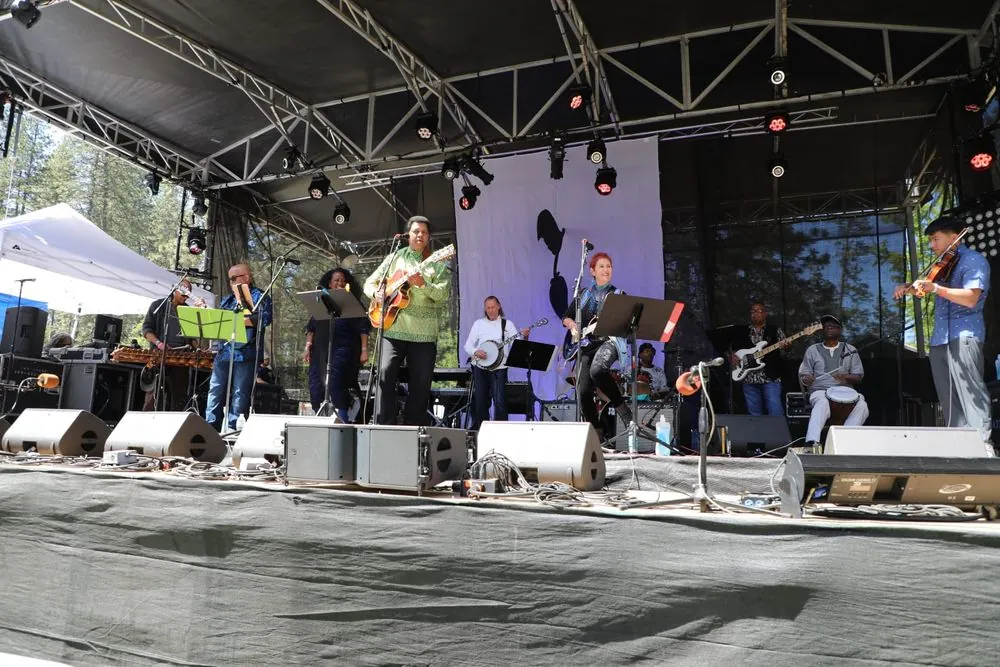
Related post
Where Did Jazz Originate? New Orleans and Its Roots
Jazz originated in African American communities in New Orleans, where blues, brass bands, Caribbean rhythms and improvisation met.
Read the article
Related post
What Is Bluegrass Rhythm? Hear the Drive
Learn how bass, guitar, mandolin, banjo and fiddle create bluegrass drive, and how to hear the pulse in a live string band.
Read the article