
Bluegrass is easy to recognize once you know what to listen for. It is an acoustic string-band sound with a strong pulse, close harmony and enough space for every player to speak. The energy comes from the way those parts lock together, not simply from playing fast.
Start with a band, not a single instrument
The most useful way to hear bluegrass is as a group conversation. A five-string banjo, mandolin, fiddle, guitar and upright bass are common voices, but no one instrument carries the entire style. The bass gives the music weight. The guitar keeps the chords moving. The mandolin creates a sharp rhythmic lift. The banjo and fiddle can fill the spaces, answer the singer or take the lead.
The Bluegrass Music Hall of Fame and Museum’s overview of bluegrass traces the style to a modern string-band sound shaped through the work of Bill Monroe and the Blue Grass Boys. That history matters because it explains why the music feels both rooted and active. Bluegrass draws from older traditions, then asks each musician to make choices in the moment.
You do not need technical vocabulary to hear this. Choose one instrument for a verse, then listen again and choose another. The first pass might follow the low bass notes. The next may catch the mandolin’s short offbeat sound. Soon the arrangement stops feeling like a rush of notes and starts sounding like several clear parts working together.

An acoustic sound with a clear edge
Bluegrass is an acoustic music first. Even on a large stage, the sound is usually built from wooden instruments and the attack of fingers, picks and bows. A banjo note snaps into the air. A mandolin chord can be dry and percussive. A fiddle can hold a note long after a guitar chord has faded. An upright bass arrives with a round, low thump that gives the ensemble a center.
That does not mean every bluegrass performance is quiet or delicate. The music can be forceful. Players create volume and excitement by choosing notes carefully, playing with conviction and leaving room around the important sounds. The absence of a drum kit makes the rhythm section easier to hear. Instead of one large beat covering everything, several instruments share responsibility for keeping time.
This acoustic character is also why bluegrass works so well in close listening rooms. You can hear the edge of a pick, the breath before a harmony enters and the small shift in energy when a soloist takes over. The details are part of the appeal. They invite a listener to stay close to the sound rather than treating the band as background noise.
The drive: forward motion without a drum kit
People often describe bluegrass as driving. That word is not only about tempo. A slow or medium-tempo song can still feel like it is leaning forward. The effect comes from the way the rhythm instruments divide the beat. The upright bass usually marks the foundation. The guitar gives the chords a steady sweep. The mandolin can add a short chop between the bass notes. Together, those parts make the song feel focused and in motion.
The banjo adds another layer of movement. Its rolling patterns can keep the air full without making the rhythm feel heavy. A fiddle may push a phrase ahead of the beat or hold a note just long enough to create tension. The best bluegrass rhythm does not sound mechanical. It has a spring in it. The players listen closely enough to move as one group while still sounding alive.
For a closer look at the people and instruments behind that rhythm, the band’s bluegrass instruments guide breaks down what each voice contributes. Hearing the separate jobs makes it much easier to understand why the whole band can feel so powerful without relying on amplified effects.
Close harmony makes the chorus lift
Bluegrass singing often has a bright, high sound. A lead vocalist carries the lyric while one or more singers add harmony above or below the melody. The goal is not a smooth, blended choir sound. The voices keep their own edges. That slight tension can make a chorus feel urgent, tender or celebratory, especially when the harmony arrives after a plainer verse.
Many songs use a high lead voice, but the exact range is less important than the relationship between the singers. A tight harmony turns a familiar line into an event. The listener hears the melody more clearly because another voice is leaning against it. In an acoustic band, that lift can arrive without any change in volume. The arrangement simply opens for a few seconds and the vocal blend changes the room.
PBS’s introduction to bluegrass beginnings connects the style to the Blue Grass Boys and the string-band traditions around them. Listen to the vocals with that history in mind. The sound is not a single inherited formula. It is a practical band language, refined through live performance, radio and musicians learning how to make a small ensemble feel complete.
Song stories stay close to the voice
Bluegrass songs often feel direct because the arrangement gives the lyric room. A ballad, gospel song, train song or comic number can begin with a simple verse, then gain force when the band answers it. Instruments do not need to play constantly. A short fiddle phrase after a line, a banjo answer before the chorus or a harmony that arrives at the right moment can make the story clearer than a crowded arrangement would.
That directness does not limit the music to one mood. Bluegrass can sound mournful, funny, restless, devotional or playful. The common thread is clarity. The lead voice, melody and pulse remain easy to follow even when the players are doing difficult work underneath. For a listener, that makes the music welcoming. You can follow the song on the first hearing, then return to notice the craft that holds it together.
Instrumental breaks keep the melody moving
A bluegrass arrangement often moves from a sung verse into an instrumental break. One musician takes the melody for a few measures, adding turns, pauses and personal phrasing. The band does not disappear behind that person. Bass, guitar and mandolin keep the harmony and pulse clear. The soloist is free to be expressive because everyone else is holding the shape of the song.
This is one of the main bluegrass characteristics that rewards repeat listening. On the first pass, you hear the banjo or fiddle in front. On the second, you may notice the guitar getting lighter so the lead can breathe. On the third, you may hear the mandolin changing its rhythm to make the handoff more exciting. The arrangement has structure, but it leaves room for a musician’s personality.
Improvisation here is not the same as ignoring the song. A player knows the melody, chords and pulse well enough to make a fresh choice without losing the group. That balance links bluegrass to jazz and blues, even though the sounds are different. Individual expression matters, but it matters most when it serves the shared performance.
Tradition and invention belong together
Bluegrass has deep ties to Appalachian and Southern string-band music, country, gospel, blues and African American banjo traditions. It is tempting to flatten that history into one simple origin story, but the music is more interesting than that. It became recognizable because musicians brought different influences into a compact, high-energy ensemble sound.
The band’s history of bluegrass origins follows the Kentucky and wider Southern story, while the African banjo article looks at the older West African and African American history behind one of bluegrass’s most recognizable instruments. Taken together, those stories make the music richer. Bluegrass is not a sealed tradition. It has always grown through listening, travel and musicians bringing their own experience to familiar forms.
That is why two bluegrass bands can use a similar lineup and still sound very different. One may favor hard-driving instrumentals. Another may focus on close singing. One may bring in gospel feeling, another a bluesy slide guitar, another a jazz-informed sense of harmony. The characteristics are a foundation, not a fence.

Hear the connections in AfroBlueGrazz
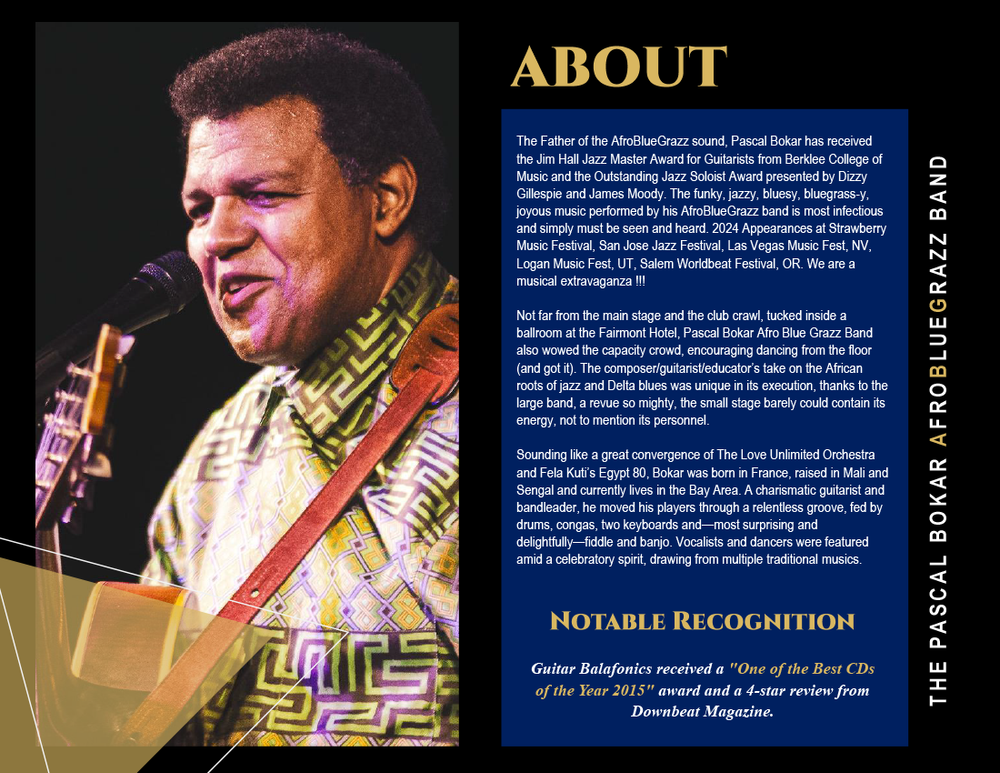
Pascal Bokar AfroBlueGrazz begins with the shared values that make acoustic music compelling: rhythm, melody, improvisation and musicians listening closely to one another. Pascal’s musical story brings Mali and Senegal into conversation with jazz, blues, bluegrass and Afro-funk. That perspective does not treat traditions as separate shelves. It makes their connections easier to hear.
Spend time with the band’s recordings after reading this guide. Listen for the acoustic pulse first, then notice where an instrument leaves the rhythm to take a melodic turn. The band’s concert and education programs bring the same listening experience into schools, concert series and community settings. For live performances, presenters can also check availability with the band.
A simple listening checklist
Start by finding the bass. Then listen for the guitar’s chord movement and the mandolin’s short lift between the beats. Follow the banjo or fiddle when it takes a break. Notice how the harmony changes the chorus, and how the band makes room for a soloist without losing momentum. Those are the bluegrass music characteristics that make the style feel immediate: acoustic detail, forward rhythm, close vocals and a conversation between players.
Frequently asked questions
What are the main characteristics of bluegrass music?
Bluegrass is usually built around acoustic string instruments, a strong forward pulse, close vocal harmony, instrumental breaks and arrangements that give individual musicians a chance to step forward while the band keeps the song moving.
Does bluegrass use drums?
Traditional bluegrass usually does not use a drum kit. The rhythm comes from the upright bass, guitar and mandolin, while the banjo and fiddle add motion, accents and melodic detail.
Why does bluegrass music sound so fast?
Many bluegrass songs use a lively tempo, but speed is not the only reason the music feels energetic. The bass pulse, mandolin chop, guitar rhythm and rolling banjo patterns all create forward motion, even in a moderate-tempo song.
Is improvisation important in bluegrass?
Yes. Bluegrass arrangements often include short instrumental breaks where a player reshapes the melody. The soloist has room for personal expression, but the rest of the band keeps the harmony and pulse steady.
Is bluegrass the same as country music?
No. Bluegrass and country share parts of a wider Southern musical history, but bluegrass is centered on an acoustic string-band sound, instrumental breaks and tight ensemble interplay. Country music includes a much broader range of instruments, production styles and songwriting approaches.
Related posts

Related post
Bluegrass Instruments: A Listener’s Guide
How to hear the banjo, mandolin, fiddle, guitar, bass and resonator guitar working together in a bluegrass band.
Read the article
Related post
What Is Bluegrass Music? A Listener’s Guide
A clear guide to the instruments, drive, harmony and improvisation that give bluegrass its sound.
Read the article
Related post
Where Did Bluegrass Originate? A Short History
How bluegrass took shape in Kentucky and the wider South, and why Bill Monroe’s Blue Grass Boys gave the music its name.
Read the article