For learning that belongs in the room
A program people can hear, see and carry forward.
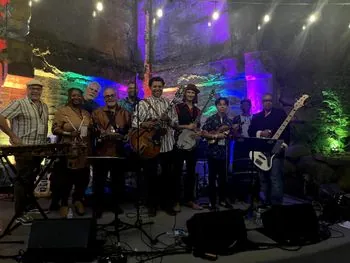
Music education works best when it gives people more than information to remember. A live performance puts rhythm, voice, movement and listening in the same room, so students and community audiences can experience the ideas as they take shape. Pascal Bokar AfroBlueGrazz brings that kind of encounter to schools, colleges, libraries, arts organizations and public programs.
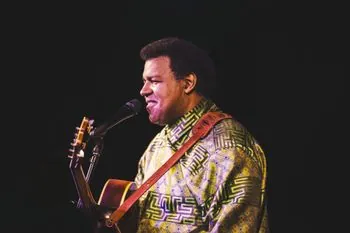
Led by guitarist, vocalist, composer, author and educator Pascal Bokar, the program connects West African musical traditions with jazz, blues, bluegrass and Afro-funk. Pascal was raised in Mali and Senegal, and his work carries the perspective of a musician who has studied, taught and performed across cultures. The result is direct enough to draw in a first-time listener, with real depth for an audience ready to ask questions and listen closer.
For a presenter, that makes the program practical as well as memorable. A concert can give a gathering its energy. A conversation can help listeners name what they are hearing. A workshop or dance presentation can invite active participation. Together, those choices create a learning experience with a real human center.
Tell us about your audience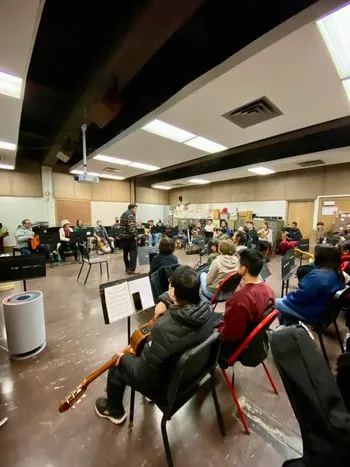
Choose the right shape for the room
One musical story, several ways to explore it.
01Concert and conversation
A live performance can be paired with a multimedia conversation about Pascal’s books and the West African cultural roots of the blues. This format gives audiences a musical experience first, then space to connect what they heard with a larger story.
02Student questions and masterclass
When learners need a closer view of the music, a Q&A or masterclass can extend the concert. Students can explore West African sabar and djembe drumming, hear how rhythm travels and bring their own questions into the exchange.
03Music and movement
A West African dance presentation can widen the experience beyond the stage. It brings movement, shared energy and cultural expression into the program, offering an accessible point of entry for a group with varied musical backgrounds.
A strong fit starts with the people you serve
Programs for classrooms, campuses and public audiences.
Every host comes to a music education program with a different goal. An elementary or secondary school may want a high-energy assembly that makes culture and rhythm immediate. A college or university may want an artist who can move between performance, historical context and thoughtful discussion. A library, museum or performing arts center may be building a public program that needs both artistic quality and an accessible invitation to participate.
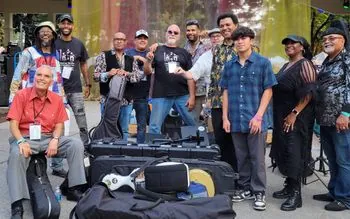
The band’s live sound gives each setting a shared starting point. Groove, melody and ensemble interplay meet listeners where they are. Pascal’s work as an educator gives the program a clear throughline, without asking an audience to arrive with prior musical training. Listeners can simply enjoy the performance, then discover more as the conversation unfolds.
A good program also respects the reality of the schedule. Some presenters have an hour with a large audience. Others are creating a longer day with several student groups, a guest conversation or a performance that opens a series. The format can be discussed around the time and setting you have, so the experience feels complete instead of being reduced to a few disconnected activities.
Pascal has academic appointments at the University of San Francisco, San Francisco City College and Sierra College in California. He has also performed with artists including Dizzy Gillespie, Donald Byrd and Roy Haynes. That combination of teaching practice and performing experience helps hosts bring a complete artist into the room, not a lecture interrupted by music.
Check availability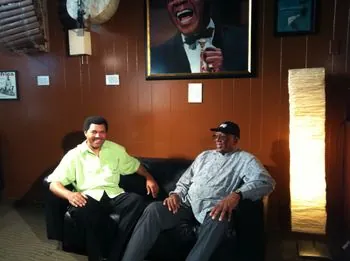
More than a performance to watch
Give listeners a way to make connections.
Music can make cultural history feel close. A rhythm heard in the room, a phrase answered by another musician or a story connected to a song can give listeners a new way to understand how traditions travel and change. The program makes room for those discoveries without losing the energy of a live set.
That balance matters for young people and mixed public audiences alike. Some listeners may recognize familiar elements of blues, jazz or popular music. Others may be hearing the connections between West African rhythmic language and American roots music for the first time. The performance gives everyone an immediate way in, then lets the conversation deepen at the pace of the room.
The learning does not end when the last note fades. A question asked afterward, a rhythm a student tries for the first time or a conversation that continues at home can become the part a listener keeps. By giving audiences both a felt experience and language for what they have encountered, the program leaves room for that curiosity to continue.
Pascal’s approach is grounded in both lived experience and active musicianship. Rather than treating culture as a set of distant facts, he brings it forward through guitar, voice, rhythm and the exchange between performers. Hosts can use that approach to create a program that supports curiosity, attentive listening and a shared sense of discovery.
Hear the musicPlan the program around the moment
A useful inquiry starts with a few details.
Start with the audience you are gathering and the experience you want them to have. Is the program a featured concert, part of a cultural series or an addition to a classroom or campus event? Will there be time for questions, a workshop or a dance presentation? Those choices help shape a format that feels intentional rather than crowded.
It helps to share the proposed date, location, audience age or group, room capacity, schedule and any production details you already know. If the program is connected to a theme, curriculum or community occasion, include that too. The team can then discuss availability and what kind of performance and learning exchange best fits the room.
For organizers, clarity up front makes the conversation useful. There is no need to arrive with every detail settled. A working outline of the day, the people attending and the role you want music to play is enough to begin. From there, the team can talk through timing, the best entry point for the audience and the practical needs of the performance.
For a campus concert focused on the wider student experience, explore the college concert series program. For a broader overview of the available formats, visit music and education programs. The next step is a conversation about the people you want to reach and the live moment you want them to remember.
Start an availability inquiry