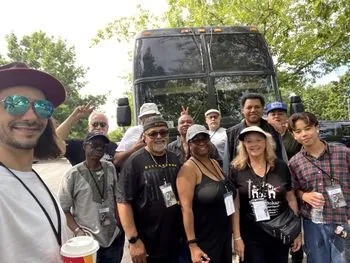
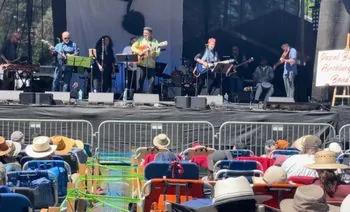
A festival set needs its own gravity
Give the stage a sound people remember.
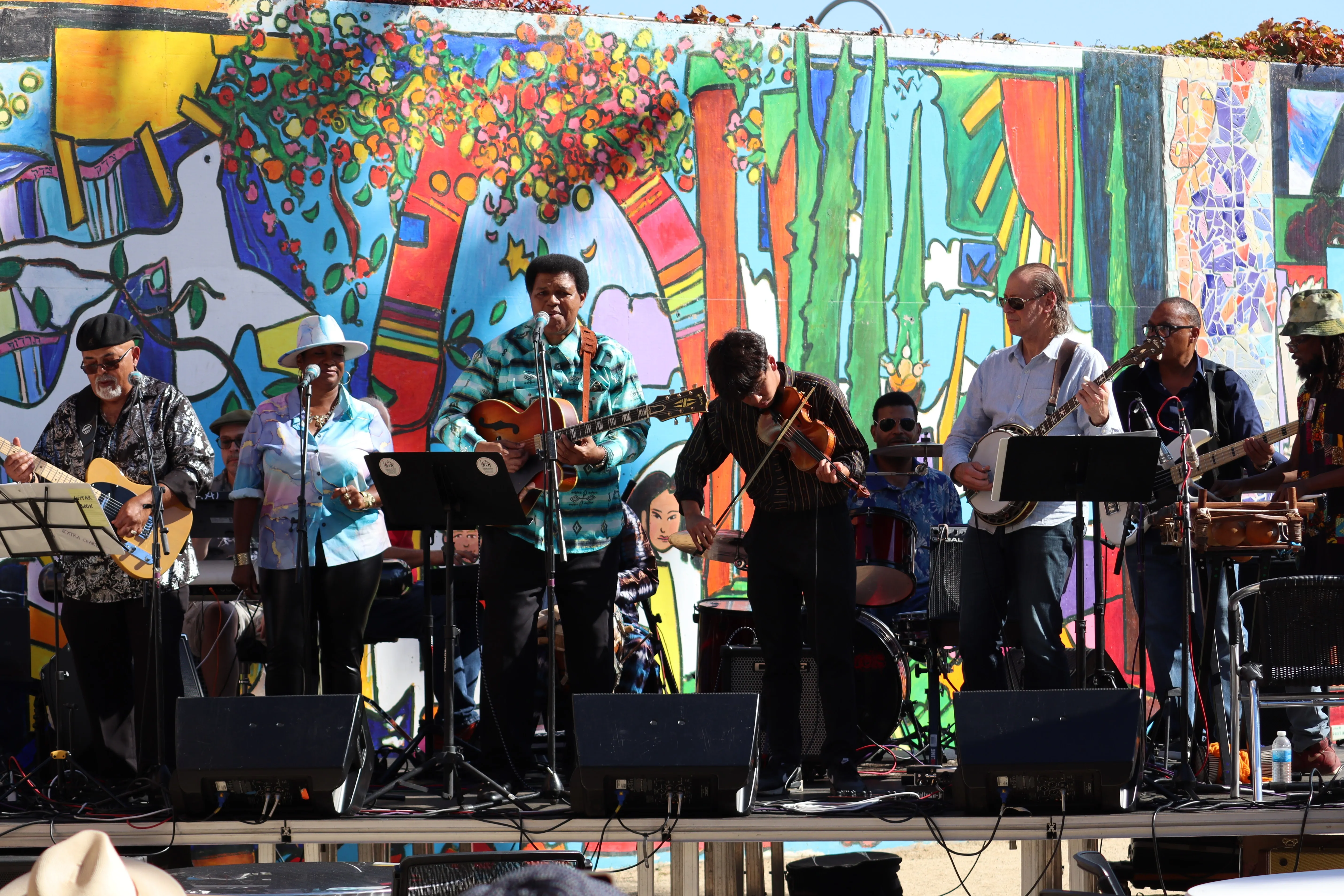
A festival crowd arrives with different ears, different histories and a limited amount of time to decide where to stand. A great festival band earns that attention quickly, then gives people a reason to stay. Pascal Bokar AfroBlueGrazz brings rhythmic momentum from the first notes, with a full live sound that lets a casual listener move closer while giving serious music fans plenty to follow.
Led by guitarist, vocalist, composer and educator Pascal Bokar, the band connects West African rhythm and melody with blues, bluegrass, jazz and afro-funk. The result is not a set built from familiar shortcuts. It is a band with its own musical identity, played by musicians who understand how to carry an outdoor stage, a listening room or a packed cultural programme.
For organisers, that means a performance that can add genuine range to a line-up without feeling disconnected from the rest of the day. It is rooted enough for a heritage or roots programme, open enough for a broad community audience and strong enough to hold its place on a major festival bill.
Tell us about your festival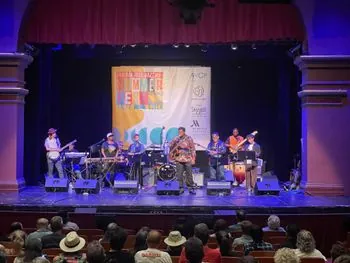
Made for the way festivals move
A complete live moment, not background between acts.
01Music festivals
For audiences that come ready to listen, the band brings strong ensemble playing, improvisation and a rhythmic centre that carries through a full set. The music has enough detail for close listening and enough immediacy to meet people walking in from another stage.
02Arts & cultural festivals
Pascal’s work carries a lived connection between West African traditions and American music. That gives a cultural programme depth without turning the performance into a lecture. The story is in the sound, and it can be expanded through a talk or conversation when the programme calls for it.
03Community celebrations
For public gatherings with wide age ranges and varied musical tastes, the groove creates an open invitation. Guests can dance, settle in with friends or listen closely from the edge of the crowd, while the stage remains the clear centre of energy.
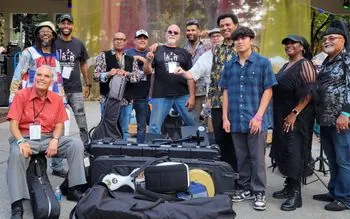
A band with a real road behind it
Festival experience that shows up in the performance.
Pascal Bokar AfroBlueGrazz has appeared at festivals and music series across the United States and beyond, including the Strawberry Music Festival in California, the San Jose Jazz Summer Fest, the Worldbeat Music Festival in Oregon and the Vancouver Wine and Jazz Festival in Washington. Those appearances matter because a festival stage asks different things of a band than a private room. The sound has to travel, the set has to gather people and the musicians have to make the most of the moment they are given.
The band meets that challenge with a show that is generous, rhythmic and alive to the audience. West African melodic and rhythmic language sits naturally beside the blues, bluegrass, jazz and afro-funk in Pascal’s music. It gives the performance a recognisable centre, while the improvisation keeps the set responsive rather than fixed in place.
That is especially useful for presenters who want a festival programme to feel curated rather than interchangeable. The band can sit beside roots, jazz, world music, blues and community programming while still bringing a distinct reason for the audience to choose this stage.
More than a spot on the schedule
A set that adds shape to the whole line-up.
Festival programmes are remembered for the way the day moves from one artist to the next. Some sets invite people to slow down and listen. Others create lift, connection and a reason to stay in the field a little longer. Pascal Bokar AfroBlueGrazz can bring that kind of movement with a sound that is rhythmic enough for an open-air crowd and musically detailed enough for a seated concert setting.
The band also gives presenters a useful bridge between audiences. A listener drawn by blues may hear the conversation with West African rhythm. A bluegrass fan may recognise the wider roots behind the banjo and string traditions. Jazz listeners can follow the improvisation and ensemble exchange. No prior knowledge is required, but there is always more to hear for the people who want to go deeper.
That range helps a programme feel welcoming without flattening its point of view. The performance is accessible because the groove is immediate, not because the music has been made generic. It gives a festival an artist with a real story, a clear sound and the confidence to carry a room on the strength of the live band. It also gives the booking team a practical, distinctive artist to build around.
Plan the set around the programme
The useful details start with your stage.
Festival booking gets easier when the first conversation is specific. Share the date, city, festival format, expected audience and the role you want the set to play in the day. A daytime community stage, an evening concert slot and a featured cultural presentation may all call for different timing and production decisions.
It also helps to know what surrounds the performance. Is the goal to build momentum before a headliner, give a family audience a strong afternoon moment, create a bridge between musical traditions or close a programme with a set that sends people out energised? That context lets the team discuss availability and fit in a way that serves the actual event.
Pascal is also an educator and author, which opens an additional option for festivals, colleges and arts organisations with a broader cultural programme. A booking may be able to pair the live band with a talk, Q&A, masterclass or other conversation about the West African foundations that run through the music. The performance remains the centre, while the surrounding programme gains a meaningful point of connection.
For a more focused African-jazz presentation, explore the African jazz band for festivals and events page. For a broader concert, special-event or community booking, see live music for events.
Start an availability inquiry